Best Extra Wide Pickleball Shoes for Wide Feet and Bunions
If you've ever finished a match and immediately wanted your shoes off, you already know that standard pickleball shoes and wide feet don't mix well. Add a bunion into the picture, and even a "comfortable" shoe on the shelf can turn into the most painful part of your game plan.
The problem usually isn't fit in the way most players think about it. It's not just that the shoe is too narrow; it's that pickleball asks your foot to move sideways, over and over, inside a shoe built to handle forward motion. That combination, a tight toe box plus constant lateral loading, is what actually causes the ache at the base of your big toe by the third game.
This article breaks down why that happens and what to actually look for in a shoe, including where DAPS pickleball shoes fit into the picture for players dealing with wide feet and bunions.
Why Do Narrow Toe Boxes Cause Bunion Pain During Pickleball?
A bunion forms when the big toe joint pushes outward, making the widest part of your foot wider than a standard shoe last expects. According to the Mayo Clinic, shoes that squeeze or press on any part of the foot, especially a narrow, pointed toe box, are a leading driver of bunion discomfort, and choosing a shoe with a wide toe box is one of the main ways to manage it.
This isn't a niche issue. Hallux valgus (the medical term for a bunion) shows up in close to half of adults at some point, and it's roughly twice as common in women as in men. If you've struggled to find pickleball shoes that don't hurt, you're far from alone.
In a standard court shoe, the toe box tapers to a point for a sleeker look. On a still foot, that might just feel snug. On a foot that's constantly shifting weight side to side, that taper becomes a wall the bunion gets pressed into, over and over, for the length of the match.
How Does Pickleball's Lateral Movement Make Bunion Pain Worse?
Pickleball is a side-to-side sport built around dinks, drives, and quick recoveries at the kitchen line.
Every lateral cut or pivot shifts your body weight onto the outer or inner edge of your foot for a split second before you push off again. If your shoe doesn't hold your midfoot in place, your foot slides inside the shoe during that shift, and the bunion joint gets driven straight into the side of the toe box instead of just resting near it.
That's the part a lot of players miss: it's not the standing width of your foot that causes the worst pain. It's what happens to that width the moment you load sideways to chase a dink.
What Shoe Features Actually Matter for Wide Feet in Pickleball?
A wide toe box gets all the attention, but on its own it only solves part of the problem. Three things need to work together.
Toe box shape, not just toe box width: A toe box that stays roomy through the forefoot, rather than one that's wide at the ball of the foot and then tapers sharply, gives a bunion space without needing to be pointed anywhere in particular. The American Academy of Orthopaedic Surgeons notes that wearing wider shoes with adequate toe room is one of the most consistent ways to reduce bunion-related pain and pressure.
Secure midfoot lockdown: This is the piece a roomy toe box can't replace on its own. If the middle of your foot isn't held snugly, your foot keeps traveling forward and sideways inside the shoe every time you plant and cut. A wide toe box with a loose midfoot just gives your foot more room to slide before it hits the wall.
Side-load support: Pickleball loads the foot sideways, not just forward and back. A shoe that's built to resist collapsing or twisting during a hard lateral push keeps the forces of a cut from concentrating on one pressure point like the bunion joint.
What Should You Avoid in a Pickleball Shoe if You Have Wide Feet or Bunions?
Skip any shoe with a sharply tapered or pointed toe shape, even if the overall size runs generous. Be cautious of shoes that only add a stretchy panel over the bunion area instead of building real room into the last; the panel may ease the ache slightly, but it doesn't change how the joint gets loaded during a pivot.
Also be wary of very soft, unstructured uppers with no lateral support at all. They can feel comfortable standing in the store, but they tend to let the foot shift and roll during real match play, which brings you right back to the same pressure problem.
How DAPS Pickleball Shoes Are Built for Wide Feet and Bunions
This is where the Desi shoe from DAPS comes in, and it's worth explaining how it's actually built rather than just saying it's "wide."
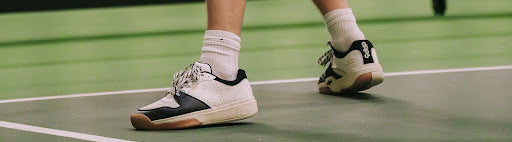
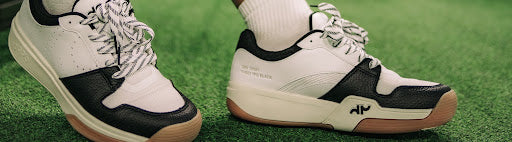
DAPS didn't take a narrow court shoe and bolt on a wide insert. The Desi's toe box is built roomy as part of the standard pattern, described by DAPS as a comfortable toe box that doesn't compromise performance. A couple of verified buyers have specifically called it out for working well with a bunion, and for fitting comfortably despite having wide feet and a high arch.
The midfoot lockdown comes from the laces combined with the Blumaka NonSlip Insole built into every Desi model, which DAPS describes as keeping the foot dialed in during play.
For side-load support, DAPS uses a carbon fiber shank through the midsole, which the brand says guides sharp angles with control and adds stability without extra weight, paired with a CNC-cut traction outsole designed for pickleball's stop-start, side-to-side demands rather than adapted from a tennis or running shoe.
Both the Desi Low and Desi Mid are available for men and women. Sizing runs true to size, and DAPS recommends going up half a size if you want extra room through the forefoot. The shoes have also been independently tested at the Heeluxe performance lab for energy return, stability, and shock absorption.
None of this means a shoe can eliminate every ache or guarantee you won't roll an ankle. What it means is that the Desi is built to reduce the specific pressure that narrow, tapered toe boxes and loose midfoot fits create for wide feet and bunions during real pickleball movement, not just to look roomy in a photo.
Final Takeaway
Wide feet and bunions don't need a wider shoe so much as they need the right combination: a toe box shaped to give the joint room, a midfoot that's locked down so the foot doesn't slide during pivots, and side-load support that keeps lateral cuts from concentrating pressure on one spot.
DAPS built the Desi around all three from the start, giving players with wide feet and bunions a pickleball shoe designed for how the sport actually moves, not a standard shoe with a wide label stitched on.
If you've been playing through discomfort because nothing seemed to fit right, it's worth trying a pair of DAPS Desi shoes, built specifically with this problem in mind, available for both men and women at DAPS.
Frequently Asked Questions
What actually causes bunion pain to flare up during pickleball, rather than everyday walking?
Everyday walking loads the foot mostly forward and back. Pickleball adds constant lateral cuts, lunges, and pivots, which shift weight sideways and press the bunion joint into the side of the toe box, especially if the midfoot isn't held securely.
Do "extra wide" pickleball shoes always come in a specific labeled width, like 2E or 4E?
Not always. Some brands offer separate wide-width SKUs with specific sizing codes, while others, including DAPS, build a roomy toe box into the standard shoe rather than offering it as a separate labeled width. Either approach can work; what matters is the actual shape and room in the toe box, not the label.
Will a wide toe box alone fix bunion pain in a pickleball shoe?
On its own, usually not. A wide toe box helps, but if the midfoot isn't locked down, your foot still slides during lateral movement and the bunion can still press against the shoe. Toe box shape, midfoot lockdown, and side-load support need to work together.
How snug should a pickleball shoe fit through the midfoot if I have wide feet or a bunion?
Snug enough that your heel and midfoot don't shift when you plant and pivot, while the toe box stays roomy. A shoe that's tight everywhere, or loose everywhere, tends to cause problems; the goal is a secure midfoot with a relaxed forefoot.