What Do Professional Pickleball Players Wear on Their Feet?
Search "best pickleball shoes" and you'll get a hundred lists comparing tread patterns and colorways. But that's only one piece of what professional players actually do for their feet. Behind the shoes, there's a whole routine: the insoles they rely on, the taping some use before matches, and what they switch into once the game is over.
We wanted to look at that fuller picture, because it's the part most guides skip. Understanding it also makes it easier to see where a well-built shoe, like the ones DAPS designs specifically for pickleball, actually fits into a player's routine instead of being just another purchase.
By the end of this article, you'll know what pros focus on at each stage, from warm-up to cool-down, and why each piece matters.
Why Foot Care Matters More Than Most Players Think
Pickleball puts a lot of stress on the lower body. Players push off, plant, and change direction constantly during a rally, and that repeated load has to go somewhere. Research on pickleball and paddleball injuries treated at outpatient orthopedic clinics found that most lower extremity injuries were ankle sprains or strains caused by a twisting mechanism, treated without surgery in the majority of cases.
A separate emergency department study found that sprains and strains were the most common pickleball-related lower extremity injury, and the ankle was one of the most frequently affected areas, behind only the lower leg.
None of this means pickleball is unusually dangerous. It just explains why serious players don't treat footwear as an afterthought. Stable footing and proper support are part of how they manage that load, match after match.
What Shoes Do Pro Pickleball Players Actually Wear?
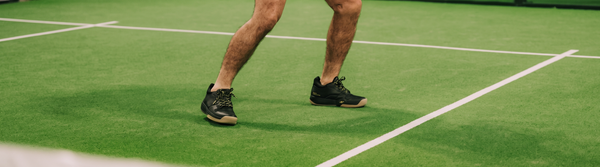
At the professional level, players wear shoes built specifically for court sports. The demands are different: constant side-to-side movement, quick stops, and sudden direction changes at the kitchen line.
A few things pros look for in a shoe:
- Lateral stability. The shoe needs to hold its shape when you cut sideways, not just when you run forward.
- Court-specific traction. A tread designed for hard courts grips through pushes and stops without leaving marks.
- Responsive cushioning. Enough softness to absorb landings, without feeling heavy or slow underfoot.
- A secure, supportive upper. So the foot doesn't slide inside the shoe during quick cuts.
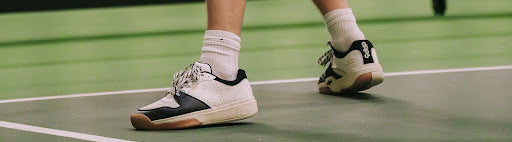
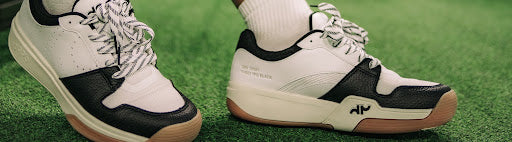
This is where DAPS pickleball shoes were built with intent. The Desi Low and Desi Mid (available for men and women) use ETPU foam cushioning to soften landings through long matches, a CNC-cut tread with non-marking rubber for court-specific grip, and a carbon fiber shank that helps guide sharp angle changes with more control. The shoes have also been independently lab tested at Heeluxe for stability and movement efficiency.
Do Pros Use Insoles for Extra Support?
Yes, and this is often the piece recreational players skip entirely. A stock insole isn't always built for lateral movement, so many players add or upgrade to one that locks the foot in place and supports the arch through quick direction changes.
DAPS shoes build this in rather than leaving it as an add-on, featuring a Blumaka Non-Slip Insole designed to help keep the foot secure inside the shoe so players get a firmer base to push off from during fast exchanges.
If you're a recreational player using shoes with a thin, generic insole, this is one of the simplest upgrades to make. It doesn't require changing anything else about your setup.
Why Do Some Players Tape or Brace Their Ankles?
Given how often ankle sprains show up in pickleball injury data, it's no surprise that taping and ankle braces are common among competitive players, especially those returning from a previous sprain.
Taping and bracing aren't meant to replace a supportive shoe; they work alongside one, adding a layer of stability at the joint itself. Players who tape typically do it before a match as a preventive habit, not just after an injury.
If you have a history of ankle issues, this is a conversation worth having with a physical therapist or sports medicine professional, since taping technique matters and isn't one-size-fits-all.
What Do Pros Wear on Their Feet After the Match?
This is the part most players never think about. After hours on the court, feet have absorbed a lot of impact, and what goes on them next matters. Tight, unsupportive footwear right after a match doesn't give the feet a chance to settle down.
Most pros simply switch into something with the same qualities they valued on court: real cushioning, enough room for the foot to sit comfortably, and support that doesn't disappear the moment the match ends. That's less about a special "recovery shoe" and more about not undoing the support your feet had for the last two hours.
This is one reason DAPS designs its shoes to work off the court as much as on it, built for comfort that carries over once play stops rather than fading the moment the match ends. You're not forced to trade support for comfort once the match is over.
Putting Together Your Own Foot Care Routine
None of these pieces work in isolation. A great shoe with the wrong socks still leads to blisters. A supportive insole doesn't help much in a shoe with poor lateral stability. The routine works because each part covers a gap the others leave open.
If you're building your own version of this, start with the shoe, since it's the foundation everything else sits on. From there, layer in moisture-wicking socks, make sure your insole actually supports lateral movement (or confirm your shoe already includes one, the way DAPS does with its Blumaka insole), and pay attention to how your feet feel once you take the shoes off. That last part often tells you the most.
Final Takeaway
The pros don't win matches because of their shoes alone. They win because they've removed the small, avoidable problems, blisters, sliding feet, sore arches, that quietly wear down performance over a long match or tournament. That comes from treating footwear as a full routine: the right shoe, the right support underfoot, and the right choice once the match is done.
Final Word From DAPS
If you're building that routine yourself, DAPS pickleball shoes (Desi Low and Desi Mid, for men and women) are designed to cover several of these bases at once: ETPU cushioning, court-specific traction, a carbon fiber shank for stability, and a Blumaka Non-Slip Insole, all tested independently at Heeluxe.
They're built for comfort on the court and after it, so the "after the match" part of your routine doesn't have to be an afterthought. You can see the full lineup at DAPS.
Frequently Asked Questions
Do professional pickleball players wear special shoes, or just tennis shoes?
Most serious players wear shoes designed specifically for court sports like pickleball, padel, or basketball, rather than running shoes. Running shoes are built for forward motion and don't offer the same lateral stability needed for quick side-to-side movement.
Why are ankle injuries so common in pickleball?
The sport involves frequent, sudden changes in direction, which puts repeated stress on the ankle joint. Research on lower extremity pickleball injuries consistently points to twisting and direction-change movements as the leading cause of ankle sprains.
Do I really need insoles if my shoes already have cushioning?
Cushioning and support aren't the same thing. Cushioning absorbs impact, while a good insole helps lock the foot in place during lateral movement. Some shoes, like DAPS, already include a supportive insole, so a separate purchase isn't always necessary.
Should recreational players tape their ankles like some pros do?
It depends on your history and comfort level. Players with a previous ankle sprain often benefit from taping or bracing as a preventive habit, but it's worth getting guidance from a physical therapist or sports medicine professional rather than guessing at technique.