What to Wear on the Court: A First-Timer's Guide to Pickleball Footwear
Most new players spend their first shopping trip on a paddle. Shoes get an afterthought, usually "whatever's already in the closet." But pickleball asks more of your feet than it looks like from the sideline: sharp lateral cuts, hard stops, and rallies that can stretch well past an hour on unforgiving concrete or asphalt.
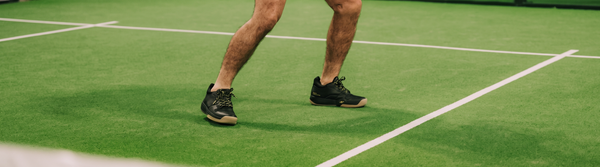
Unlike running, where your foot mostly moves forward, pickleball keeps you shifting side to side, planting, and pushing off in a new direction every few seconds. That's where a shoe's toe box shape, outsole grip, and cushioning stop being minor details and start affecting how your feet feel by the third game.
This guide walks first-timers through what actually matters in a pickleball shoe, then points you toward DAPS DESI shoes, which were designed around this exact movement pattern, with a wide, roomy toe box and grip built for hard courts.
Why Pickleball Is Tougher on Your Feet Than It Looks
Court sports specialists have been direct about this: pickleball's quick lateral movements, sudden stops, sudden pivots, and rapid acceleration place repetitive stress on the ankle ligaments, Achilles tendon, plantar fascia, and calf muscles. That's a lot of small structures in your foot and lower leg doing repeated work, session after session.
The numbers back this up. Data presented at the American Orthopaedic Foot & Ankle Society's 2024 annual meeting found that foot and ankle injuries related to pickleball rose 6.5-fold between 2019 and 2023.
None of this means a good shoe fixes everything on its own; conditioning, warm-ups, and technique all matter too. But it does mean footwear built for the sport's actual movement pattern is worth taking seriously from your very first game.
What to Look for in a Wide-Fit Pickleball Shoe Before You Buy
Before you shop, it helps to know what each part of a court shoe is actually doing for you:
- Outsole grip: Court-specific rubber with a tight tread pattern helps your foot catch and hold during a sharp stop or direction change, instead of sliding on hard court surfaces.
- Lateral (midfoot) support: A snug midfoot fit, sometimes reinforced internally, keeps your foot from shifting inside the shoe when you cut sideways.
- Cushioning: Good midsole foam absorbs repeated impact so your feet feel less beat up after a two-hour session, not just after the first ten minutes.
- Toe box width: A roomy forefoot lets your toes spread instead of being squeezed together, which supports natural balance and comfort, especially if your feet run wide or tend to swell during play.
- Removable insole: Lets you swap in your own orthotic if you already use one for daily wear.
First-timers often overlook the toe box until their feet start hurting mid-match, because a shoe that feels fine standing in a store can feel very different after an hour of lateral loading.
DAPS DESI Low: A Wide, Roomy Toe Box Built for Quick Lateral Cuts
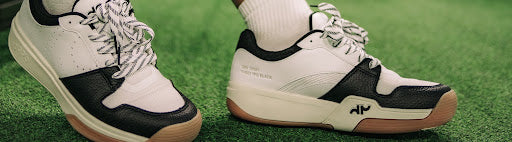
The DAPS DESI Low was developed specifically for court movement, pairing a roomier toe box with a supportive midfoot lockdown, so your foot doesn't feel loose during a fast cut.
- Wide, roomy toe box: Gives your toes room to spread naturally (DAPS doesn't offer a dedicated wide-width size, but the forefoot shape is cut generously enough to suit many wider feet).
- CNC-cut, non-marking rubber outsole: A precision-cut tread pattern designed for hard-court grip during stops and direction changes.
- ETPU midsole foam: A step up from standard foam that returns more energy with each step and resists compressing over a long session, which helps reduce fatigue.
- Removable Blumaka NonSlip insole: Adds cushioning while helping your foot stay in place inside the shoe, and it comes out if you prefer your own insole.
- Low-top profile: Built for players who want a lighter, more agile feel around the ankle.
Who it suits: First-timers who want an agile, low-profile shoe with extra forefoot room, without feeling like they're wearing a bulky shoe. Available in men's and women's sizing.
DAPS DESI Mid: Extra Ankle Hold for Wide Feet During Long Rallies
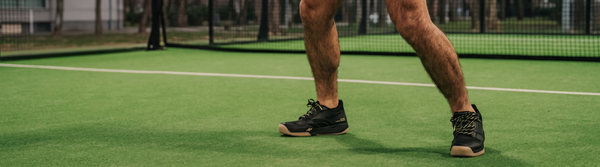
The DESI Mid shares the same platform as the Low (same toe box shape, midsole, outsole, and insole), with one addition: a mid-top collar built for players who want more support around the ankle during repeated stops and starts.
- Same wide, roomy toe box and ETPU midsole as the DESI Low, so you're not trading foot comfort for ankle support.
- Mid-top collar: Adds extra hold around the ankle, which some first-timers find reassuring during their first few sessions of lateral movement.
- Same CNC-cut rubber outsole and Blumaka insole for grip and all-session cushioning.
Who it suits: First-timers who feel less confident about side-to-side stability, or anyone who simply prefers a bit more coverage around the ankle. Available in men's and women's sizing.
DESI Low or DESI Mid: Which One Fits a First-Timer's Game?
There's no wrong answer here since both shoes share the same core build. If you're coming from running shoes and want something that feels light and low to the ground, start with the DESI Low.
If you'd rather have a bit more structure around your ankle while you get used to pickleball's stop-and-go rhythm, the DESI Mid is worth trying first. Either way, the toe box room and cushioning stay the same.
The Bottom Line for First-Time Players
Footwear isn't the flashiest part of getting started in pickleball, but it's one of the few pieces of gear your feet feel every single point. Look for a shoe that gives your toes room, holds your midfoot steady on lateral cuts, and cushions well enough to still feel good two hours in.
That's exactly the build DAPS put into the DESI Low and DESI Mid: a wide, roomy toe box, court-specific grip, and cushioning designed to go the distance with you. If you're shopping for your first real pair of pickleball shoes, they're worth trying on before your next session.
FAQs
Do first-time players really need special court shoes, or will running shoes work?
Running shoes are built for forward motion, not repeated side-to-side loading. They typically lack the midfoot lockdown and lateral grip that court movement calls for, which is part of why court-specific shoes exist in the first place.
Why does toe box width matter so much for pickleball specifically?
Because your feet load sideways constantly. A cramped toe box can add discomfort on top of that lateral stress, especially in sessions that run an hour or longer.
Should a first-timer choose the DESI Low or DESI Mid?
Either is a reasonable starting point. Choose the Low if you want a lighter, more agile feel, or the Mid if you'd like extra ankle coverage while you're still getting comfortable with the sport's movement pattern.