


Key Takeaways
- Court shoes can be used for pickleball, but they are not built for the sport's specific movement demands.
- Pickleball requires quick lateral movements, sudden stops, and precise court grip.
- Wearing the wrong footwear increases your risk of ankle rolls, knee strain, and slipping on the court surface.
- Pickleball-specific shoes are engineered for the movements and demands of the game.
If you're picking up pickleball or switching from tennis or badminton, you might wonder whether your existing court shoes will do the job. It's a fair question. Court shoes look similar, and the courts don't look that different. So what's the big deal?
The truth is that footwear matters more than most new players expect. Court sports share some movement patterns, but pickleball has its own rhythm, including short, explosive lateral bursts and quick direction changes. Your shoes need to keep up with all of that without putting your joints at risk.
In this guide, we'll give you a straight answer on whether court shoes work for pickleball, walk through the real pros and cons, and explain what makes a pickleball-specific shoe the smarter choice for serious players.
Can You Wear Court Shoes for Pickleball
Yes, you can, but with limitations. Court shoes were designed for court sports like tennis or squash, so they offer a baseline level of durability and grip. If you're a casual player stepping onto the court once a week, your tennis shoes will get you through a session without obvious issues.
But if you're playing regularly, competing, or want to protect your body and improve your game, court shoes stop being a practical option. They weren't engineered for the specific biomechanics of pickleball, and the performance gap becomes noticeable the more you play.
Think of it like driving a standard car on a mountain trail. It gets you moving, but it wasn't built for those conditions, and every extra mile adds wear and risk.
What Are the Limitations of Court Shoes for Pickleball
They Lack Pickleball-Specific Lateral Support
Pickleball is dominated by lateral movement. Court shoes offer some lateral support, but not the reinforced sidewall construction found in dedicated pickleball shoes.
Without adequate lateral support, your foot can roll over the edge of the shoe during sharp cuts. Over time, this strains the ankles, knees, and hips, even if no acute injury happens in the moment.
The Traction Pattern May Not Match the Court
Tennis shoes use a herringbone traction pattern built for clay and hard court surfaces. Pickleball is most commonly played on gymnasium floors or sport-specific hard courts. The grip requirements differ slightly, and a traction pattern optimized for another sport may leave you sliding during sudden stops.
The Weight and Cushioning Are Calibrated for Different Movements
Court shoes are often heavier and cushioned for the longer rallies and more continuous running in tennis or basketball. Pickleball involves shorter, more explosive bursts of effort. A heavier shoe slows your reaction time, and excess cushioning can reduce the court feel that helps you plant and push off efficiently.
They Wear Out Faster on Pickleball Courts
Because court shoes aren't designed for pickleball's specific drag and pivot patterns, they tend to wear unevenly. The outsole degrades faster in the areas where pickleball players load their weight near the toe, the lateral edge and the shoe loses its grip and support sooner than expected.
Injury Risk Increases Over Time
The cumulative effect of mismatched footwear is the most important concern. A single session won't cause damage, but repeated play in court shoes that don't fit the movement profile of pickleball adds stress to your joints. Plantar fasciitis, ankle sprains, and knee pain are common complaints among players who delay switching to appropriate footwear. According to a clinical study, 42% of recreational pickleball players reported a fall during play, with lunging and backward movement as the leading causes. Movements where lateral shoe stability plays a direct protective role.
Why Are Pickleball-Specific Shoes a Better Option

Pickleball-specific shoes are engineered around how the sport is actually played. Every design element from the outsole grip pattern to the upper material and the midsole cushioning profile is calibrated for the unique demands of the game.
Engineered Lateral Support
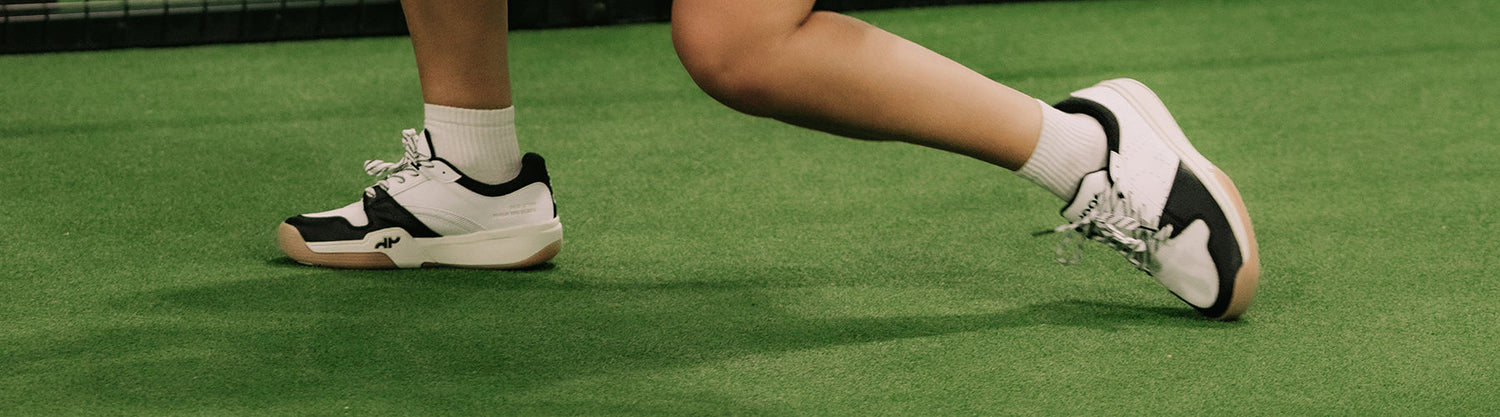
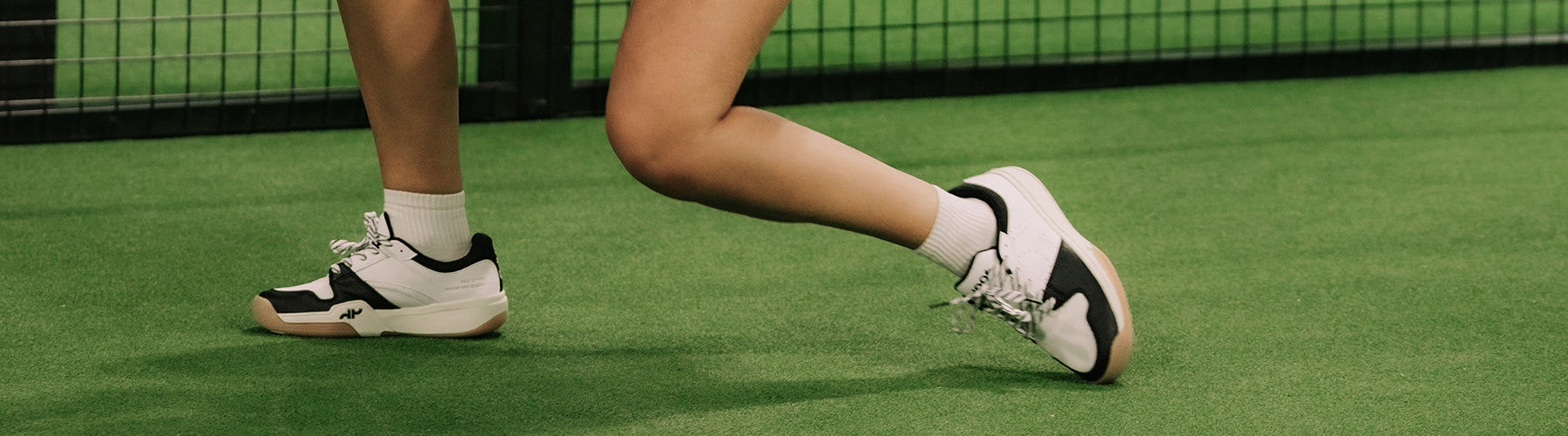
Pickleball shoes feature reinforced sidewalls and a wider base specifically to support the side-to-side movement that defines the sport. This keeps your foot stable during sharp direction changes without restricting natural movement when you push forward or backward.
Court-Optimized Grip
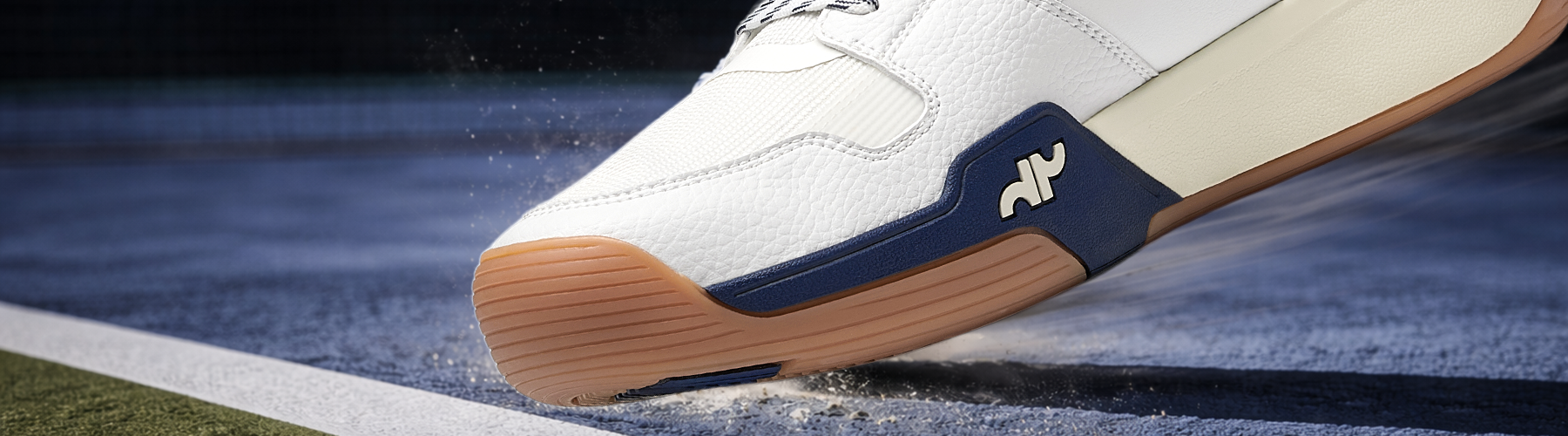
The outsole traction on a pickleball shoe is designed for the specific friction requirements of pickleball court surfaces. You get a reliable grip during the quick stops and pivots the game demands, without the slipping or dragging that comes from mismatched traction patterns.
Lightweight and Responsive
Good pickleball shoes are built lighter and more responsive than multi-purpose court shoes. Less weight means faster footwork. Better energy return means less effort to push off and change direction. These differences may seem small, but they add up over a match.
Built for Longevity on Pickleball Courts
Purpose-built shoes use outsole materials and tread depths designed to withstand the specific abrasion patterns of pickleball play. They hold up longer, maintain their grip longer, and give you consistent performance across many more sessions.
How Do You Choose the Right Pickleball Shoe

Prioritize Lateral Stability
Look for a shoe with a reinforced outer edge and a wide base. When you press on the side of the shoe with your hand, it should feel firm and supportive. This is the most important feature to check for pickleball footwear.
Check the Outsole Grip Pattern
Ask whether the shoe is designed for hard court or multi-court use. Pickleball is typically played on hard courts or gymnasium floors, so look for a herringbone or pivot-point traction pattern that performs well on those surfaces. Avoid running shoe outsoles with deep lugs; they are not built for court sports.
Match Cushioning to Your Playing Style
If you play for extended periods or have existing joint sensitivity, look for a shoe with adequate cushioning in the midsole. If you prefer quick, light movement and a strong court feel, opt for a firmer midsole. Both are valid depending on how you play.
Consider Fit and Toe Box Width
Pickleball involves a lot of toe-off pressure and forward lunging. A shoe that is too narrow in the toe box will cause discomfort and restrict your movement. Look for a shoe that gives your toes room to spread naturally without excess space that causes the foot to slide inside.
Think About Court Surface
Indoor and outdoor courts have different abrasion levels. Outdoor surfaces are harder on outsoles, so look for a thicker, more durable rubber compound if you play primarily outdoors. Indoor courts reward lighter, more grippy outsoles with better traction on smoother surfaces.
How DAPS Pickleball Shoes Support Your Game
DAPS designs footwear specifically for pickleball players who take their performance seriously. Rather than adapting general court shoes to a new sport, DAPS builds its pickleball shoes from the ground up with the movement patterns, surface conditions, and physical demands of the game at the center of every design decision.
DAPS pickleball shoes are built with reinforced lateral support to keep your feet stable through the rapid direction changes the game demands. The outsoles use purpose-optimized traction patterns for both indoor and outdoor pickleball courts, giving you a consistent grip without dragging or slipping. The fit is engineered for the kind of explosive, reactive footwork that wins points.
Whether you're a recreational player looking to protect your joints or a competitive player looking for every edge, DAPS offers a footwear solution that matches where you are in the game. Visit DAPS to explore the full range.
Final Takeaway
Court shoes can work as a starting point, but they are not built for pickleball. The sport demands footwear that handles fast lateral movement, precise stops, and court-specific traction, all areas where general court shoes fall short over time.
Making the switch to pickleball-specific footwear is one of the simplest upgrades you can make for your game and your body. It reduces injury risk and supports better movement on the court.
DAPS builds pickleball shoes for exactly this purpose. From court grip to lateral support to lightweight construction, every element is designed to help you move better and play longer. If you're ready to stop compromising and start playing at your best, explore the full DAPS footwear collection.

Leave a comment
This site is protected by hCaptcha and the hCaptcha Privacy Policy and Terms of Service apply.