


Key Takeaways
- Wide-toe-box shoes allow your forefoot to spread naturally, supporting better balance and comfort during lateral movement.
- Proper fit reduces foot fatigue. Shoes that are too narrow can cause pain, blisters, and reduced stability during long sessions.
- Pickleball involves frequent side-to-side movement, so lateral support is just as important as cushioning in a court shoe.
- Grip and traction quality affect how confidently you can push off and change direction. Not all court shoes are equal.
- Trying on shoes with the socks you play in is one of the simplest and most overlooked tips for getting the right fit.
How to Choose the Right Pickleball Shoes for Wide Feet

If you have wide feet, you already know the frustration. You lace up, step onto the court, and within twenty minutes, your toes are pressing into the sides of the shoe, your balance feels off, and your focus shifts from the game to the discomfort. It doesn't have to be that way.
Choosing the right pickleball shoes for wide feet directly affects how you move, how long you can play, and how confidently you respond to every shot. This guide breaks down exactly what to look for, what to avoid, and how to make the right call when selecting your next pair.
We'll cover toe box space, lateral support, grip, insole quality, and the common mistakes wide-footed players make when buying court shoes. By the end, you'll have a clear picture of what a good fit actually means and why settling for a generic option rarely works out on the court.
Why Does Toe Box Width Matter So Much for Pickleball Players
The toe box is the front section of a shoe that houses your toes. For wide-footed players, this is where most problems begin. When the toe box is too narrow, your toes are forced together. That compression causes discomfort, affects balance, and can lead to longer-term issues like blisters or soreness after extended play.
In pickleball specifically, your toes play a surprisingly active role. When you split-step, push off toward the net, or brace during a hard return, your toes press outward for stability. A shoe with adequate toe box width lets that natural spread happen without friction. A narrow shoe resists it.
Look for shoes that describe their toe box as wide, roomy, or accommodating. Real-world player reviews are often the best indicator here if multiple people with wide feet note that the toe box gives them the space they need; that's a strong signal.
What Kind of Lateral Support Should Wide-Footed Players Look For
Court sports like pickleball require a lot of side-to-side movement. Research on court sports shows that lateral movement accounts for roughly half of all directional changes during a typical session. That puts significant stress on the outer edge of your shoe and the ankle region, which means lateral support isn't optional; it's essential.
For wide-footed players, lateral support becomes even more critical because a poorly fitting shoe can shift slightly underfoot during quick movements. A scoping review in the Journal of Physical Activity and Health specifically recommends that pickleball players choose a cross-training or court shoe over a regular running shoe, citing the sport's inherent need for lateral stability during play. You want a shoe that holds your midfoot securely without squeezing the forefoot. Look for features like a carbon fiber shank stabilizer, which transfers energy efficiently and keeps the shoe from flexing in the wrong direction.
Mid-top options offer additional ankle wrap, which some wide-footed players prefer for the added lockdown feel. Low-top styles can still offer strong lateral support if the midsole and outsole construction are purpose-built for court movement. Either way, the key is that the shoe shouldn't roll or feel unstable when you push hard sideways.
Does Cushioning Help or Hurt Wide Feet on the Court
Cushioning matters, but not all cushioning is the same. Standard foam midsoles compress over time and can lose their supportive quality faster than higher-grade alternatives. For players with wide feet who are spending two to four hours on the court at a time, the quality of the midsole foam directly affects how their feet feel at the end of a session.
ETPU midsole foam, the type used in DAPS DESI shoes, is a step up from standard EVA foam. It delivers better energy return, meaning your foot gets more bounce back with each step rather than sinking into dead cushioning. This reduces fatigue, which matters a lot for wide-footed players who may already be dealing with extra strain from ill-fitting footwear.
A quality insole compounds this benefit. The Blumaka NonSlip insole used in DAPS shoes adds cushioning while keeping your foot from shifting inside the shoe, a particular issue for wide-footed players in shoes that are slightly too large as a workaround for narrow widths. Good cushioning and a stable insole work together, not independently.
How Does Grip and Outsole Design Affect Wide-Footed Players
Grip affects every player, but it has particular relevance if your foot is wider. A wider foot means more surface area in contact with the ground, which can work in your favor if the outsole is designed to handle it. Court shoes with traction-tuned rubber outsoles that feature sharper tread edges provide better directional control, whether you're stopping hard or pushing off for an overhead.
CNC-cut tread patterns create more precise grip edges compared to stamped molds. This matters during quick stops and changes of direction because the grip needs to engage instantly. For wide-footed players, a shoe that grips confidently means you can move naturally rather than compensating with tentative footwork.
Also, check whether the outsole is non-marking. Many indoor courts require non-marking soles, and this is a detail often overlooked when buying online. DAPS shoes use a non-marking rubber outsole that works across indoor hardwood and outdoor acrylic surfaces without leaving scuffs.
Does Shoe Construction Type Matter
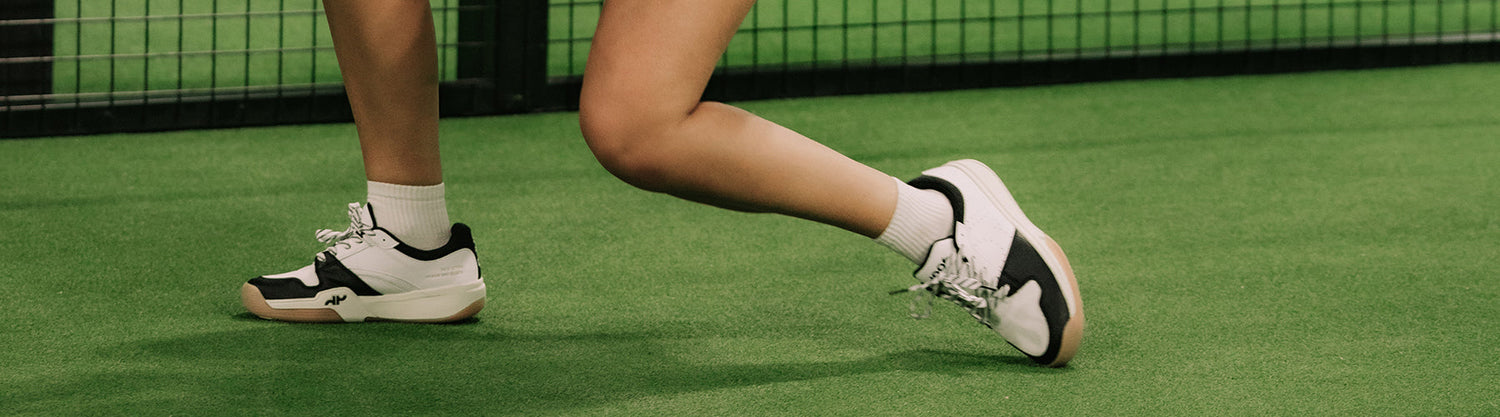
For wide-footed players, both low-top and mid-top styles can work well, but they serve slightly different needs. Low-tops like the DAPS DESI Low offer more freedom of movement and are lighter, making them ideal for players who prioritize agility and court speed. They work best when the midsole and outsole provide strong lateral stability on their own.
Mid-tops like the DAPS DESI Mid offer a higher ankle collar that wraps around the ankle, providing extra lockdown. Players who prefer a more secure feel around their ankle or who have had ankle discomfort with low-tops often find mid-tops more comfortable during longer sessions. The added height doesn't compromise movement as much as a full high-top would.
The choice between the two often comes down to personal preference. If you haven't tried both, it's worth experimenting. Some wide-footed players find the low-top gives their foot more room to move naturally inside the shoe, while others prefer the extra structure of a mid-top. Neither is wrong; what matters is that the shoe fits properly throughout.
How Should You Actually Test Fit Before Buying
If you're buying in person, always try shoes on with the socks you typically play in. Court socks are usually thicker than everyday socks and can make a real difference in how a shoe fits around the forefoot. Stand up and walk around. Then simulate a split-step: feet shoulder-width apart, slight bend in the knees, weight on the balls of your feet. The shoe shouldn't feel tight anywhere.
If you're buying online, look for brands that offer free exchanges and hassle-free returns. DAPS offers both, which removes the risk from ordering online. Their sizing guidance recommends a true-to-size fit for most players, with the option to go up half a size if you prefer more room in the forefoot. The wide toe box in DAPS shoes is purpose-designed to accommodate natural foot spread.
Read reviews specifically from players who mention having wide feet. A reviewer who says the shoe fits true-to-size is helpful. A reviewer who says they have wide feet and the toe box gave them plenty of room is exactly what you're looking for. Real-player feedback consistently reflects how a shoe performs across different foot types.
Final Takeaway
Getting the right pickleball shoes for wide feet is about understanding what your feet actually need: space to spread in the toe box, lateral support to handle side-to-side movement, quality grip on the court surface, and a midsole that keeps you comfortable through extended play. None of these features requires compromise.
DAPS was built specifically for pickleball, not repurposed from another sport, not labeled differently for a trend. The DESI line, available in both Low and Mid styles, features a wide toe box that real wide-footed players have consistently praised, ETPU midsole cushioning for lasting energy return, a carbon fiber shank for lateral stability, and a traction-tuned outsole that performs on every court surface.
If you've been tolerating uncomfortable shoes because you thought a good fit meant trading off performance, DAPS is worth trying. Their free exchange policy means there's no risk in finding the right size. Your feet and your game will thank you.

Leave a comment
This site is protected by hCaptcha and the hCaptcha Privacy Policy and Terms of Service apply.