


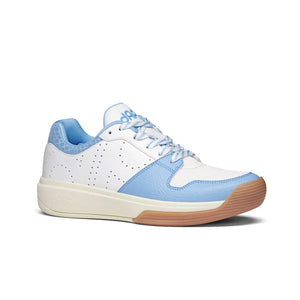


The DESI platform
Four layers.
One platform.
The short answer
Every DESI runs the same chassis: a CNC-cut non-marking outsole for grip, a carbon fiber shank for midfoot stability, an ETPU midsole that returns energy instead of absorbing it into nothing, and a removable Blumaka NonSlip insole that locks the foot down. Scroll to walk the stack layer by layer.
Independently measured at Heeluxe.
Layer by layer
Inside the DESI.


01 · Grip
CNC-cut outsole.
Non-marking rubber, machined rather than molded, so every groove is exactly where the movement needs it. It grips through pushes and hard stops on concrete, acrylic and gym floors, and lets go cleanly when you pivot, which is what saves knees.
Court-legal everywhere: non-marking is a rule at most indoor venues, not a preference.

02 · Stability
Carbon fiber shank.
A plate through the midfoot that refuses to twist. When you change direction at speed the shoe holds its shape instead of folding, so the energy of the cut goes into the floor rather than into your arch. It is why the roomy toe box costs nothing in stability.
Stability comes from the midfoot, not from squeezing the forefoot.

03 · Energy
ETPU midsole.
Expanded TPU foam: thousands of fused energy capsules that compress on landing and push back on takeoff. It absorbs the impact your heels would otherwise take, then returns it. Measured at Heeluxe rather than promised in adjectives.
The push-off numbers are further down this page.

04 · Lockdown
Blumaka NonSlip insole.
The layer your foot actually touches. It holds the heel so the shoe moves when you move. No slip inside the shoe means every drive puts power into the floor. Fully removable, so podiatrist-fitted orthotics drop straight in. Blumaka states the foam is 88% recycled.
The difference heel-pain players feel first.
Why it works together
A system, not a parts list.
Grip needs stability
Traction that strong would twist a soft shoe. The shank is what lets the outsole bite without folding the platform.
Energy needs lockdown
An energy-return midsole is wasted if your foot slides a few millimeters first. The insole makes the foam's push-back land on time.
Proven, not promised
The whole stack was measured independently at Heeluxe: traction, energy return, stability and fit.