


Key Takeaways
- Pickleball-specific court shoes provide outsole grip designed for hard court surfaces.
- Quality cushioning (especially ETPU midsole foam) improves comfort and energy return.
- A snug, secure fit prevents your foot from sliding inside the shoe.
- Durability matters: high-durability rubber outsoles help maintain grip.
- DAPS DESI men's pickleball shoes are purpose-built for the sport and lab-tested for performance.
Pickleball is one of the fastest-growing sports in America, and for good reason. It is fast, social, and genuinely exciting to play. But the explosive lateral movements, sudden stops, and rapid direction changes that make pickleball so thrilling also make footwear one of the most important pieces of equipment you own.
Slipping, rolling an ankle, or developing chronic knee pain are all common outcomes for players who wear running shoes, casual sneakers, or cross-trainers on the court. The right men's pickleball court shoes are specifically engineered to handle the unique demands of the game: grip that locks you in on hard surfaces, lateral support that helps support your ankles during movement, and cushioning that absorbs impact across a two-hour session.
In this guide, we break down the exact features that separate high-performance court shoes from footwear that may increase your risk during play. We also walk you through how to match shoe features to your playing style and point you toward the top DAPS picks built for men who play hard.
Why Do Regular Athletic Shoes Cause Slips on Pickleball Courts
Most running shoes are built for forward motion. Their outsoles are designed to propel you straight ahead, with tread patterns optimized for heel-to-toe rolls over pavement or treadmill surfaces. When you wear them on an indoor hardwood or outdoor acrylic pickleball court, that same sole becomes a liability.
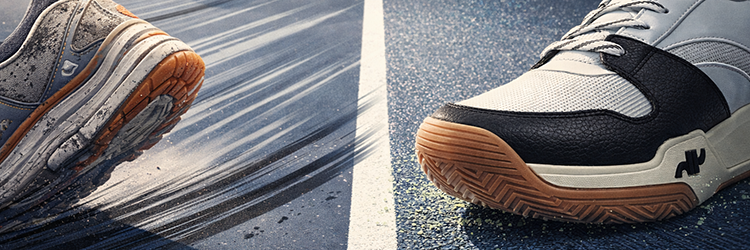
Pickleball courts require grip in all directions (forward, sideways, and diagonally). Court shoes designed for pickleball use a herringbone or CNC-cut tread pattern that creates grip in multiple directions simultaneously. This tread bites into the court surface, whether you are pushing off to the right or planting hard to stop a drive. The difference in grip between a running shoe and a proper court shoe is immediately noticeable when you first step on the court.
What Makes Outsole Grip So Important for Reducing Injury Risk
Slipping on a pickleball court rarely produces a gentle stumble. Most slips happen during explosive moments: the hard lunge for a wide ball, the quick split-step before a return, the sprint from the baseline to the kitchen. When your foot slips in those moments, the body's natural recovery response can wrench your knee or ankle in ways that lead to sprains, tears, or worse. Research across sports shows that lower-limb areas like the ankle and knee are most commonly affected during fast-paced play, with many non-contact injuries linked to movement, balance, and control rather than direct impact.
A traction-tuned rubber outsole provides the controlled friction your body needs to move with confidence. It lets you push off hard with greater confidence and reduced chance of sliding, it allows you to plant and change direction without your foot skating out.
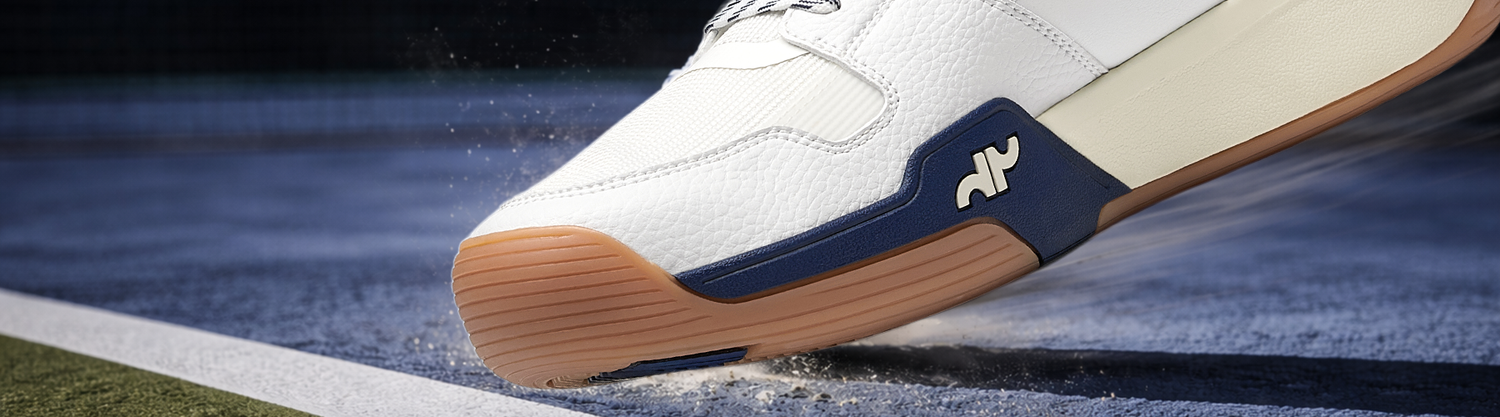
DAPS DESI shoes feature a high-durability rubber outsole with CNC-cut tread that delivers sharper edges than stamped molds. Sharper tread edges mean more biting surface contact with the court at the exact moments you need it most: during quick stops, hard pushes, and fast lateral footwork.
How Does Shoe Fit Affect Stability on the Court
A shoe that looks right on paper can still cause injuries if the fit is wrong. When your foot slides inside the shoe during lateral movements, you lose both control and stability. The foot shifting inside the shoe is one of the primary causes of blisters, black toenails, and the subtle ankle instability that compounds into a sprain over time.
The ideal fit for a pickleball court shoe is snug across the midfoot and heel, with a small amount of room in the toe box, enough that your toes are not compressed, but not so much that your foot slides forward during stops. The insole plays a major role in this. A high-quality insole grips the bottom of your foot and prevents the sliding that a loose fit allows.
DAPS DESI shoes come with the Blumaka NonSlip Insole, which is widely regarded as the top performance insole in pickleball. The Blumaka insole grips the bottom of your foot, helping reduce internal sliding while also providing additional cushioning and energy return. The shoe itself is designed with a true-to-size fit that matches most athletic shoe sizing, with a contoured construction that locks the heel in place during aggressive lateral movements.
Which DAPS Men's Pickleball Shoes Are Right for Your Game

DAPS offers the DESI in two cuts, Low and Mid, each built with the same core technology but suited to different playing preferences.
DAPS DESI Low - Best for Speed-Focused Players
- Low-cut silhouette for maximum freedom of movement and a lightweight feel on court.
- Traction-tuned CNC-cut rubber outsole grips indoor and outdoor court surfaces in all directions.
- ETPU midsole delivers high energy return and cushioning without adding bulk.
- Blumaka NonSlip Insole prevents internal foot sliding and adds performance-level cushioning.
- Carbon fiber shank stabilizer provides torsional control without restricting movement.
- Ideal for: Aggressive baseline players and those who prioritize speed and agility over maximum ankle coverage.
DAPS DESI Mid - Best for Ankle Support and Power Players
- Mid-cut design wraps around the ankle for additional joint support during explosive lateral cuts.
- Same traction-tuned rubber outsole as the Low, with identical CNC-cut grip performance.
- ETPU midsole provides excellent energy return for power players who push off hard on every shot.
- Blumaka NonSlip Insole and carbon fiber shank stabilizer included as standard features.
- Ideal for: Net-dominant players, tournament competitors, and anyone with previous ankle injuries who needs extra confidence in their footwear.
How Do You Choose the Right DAPS Shoe Based on Your Playing Style
Your playing style and injury history should be the two primary factors in your decision. If you play an aggressive all-court game with lots of lateral movement from the baseline, the DESI Low gives you the mobility and speed you need without sacrificing grip or stability. If you are a net player who makes explosive split-steps and frequent direction changes close to the kitchen line, the added ankle coverage of the DESI Mid offers added support for high-intensity movement.
Players with a history of ankle sprains or current ankle instability should lean toward the DESI Mid regardless of playing style. The higher collar does not limit mobility in any meaningful way for most players, but it does provide a physical reminder to the ankle to stay within a more controlled range of motion.
If you play primarily outdoors on asphalt or hard acrylic courts, both models perform equally well. The traction-tuned outsole is designed for all surface types. Players who compete both indoors and outdoors will find the DESI handles court transitions without any adjustment period, which is a practical advantage for tournament players or those who move between facilities.
Final Takeaway
Reducing the risk of slips and injuries in pickleball is not complicated, but it does require the right footwear. The features that matter most are court-specific outsole grip, lateral stability, quality cushioning, a secure fit, and long-lasting durability. Each of these features supports your movement in different ways, and the best men's pickleball court shoes bring all of them together in a single, purpose-built package.
DAPS DESI men's pickleball shoes were designed from the ground up for exactly this. With a CNC-cut traction-tuned rubber outsole, carbon fiber shank stabilizer, ETPU midsole cushioning, and the Blumaka NonSlip Insole, all validated through Heeluxe laboratory testing, the DESI delivers performance, support, and confidence that serious players need on every court.
Whether you choose the agile DESI Low or the supportive DESI Mid, you are putting on shoes built to support your performance and help you play with confidence from the first point to the last.

Leave a comment
This site is protected by hCaptcha and the hCaptcha Privacy Policy and Terms of Service apply.