


Key Takeaways
- Pickleball demands quick lateral cuts and explosive stops, so footwear built specifically for those movements performs better than cross-trainers or running shoes.
- Court grip, lateral support, and cushioning are the three features that matter most for men who play regularly.
- A carbon fiber shank in the midsole provides directional stability during sharp angle changes without adding weight.
- Non-marking rubber outsoles protect court surfaces and are required at most indoor facilities, so always check before you play.
- Fit matters as much as features: a locked-in heel and a comfortable toe box reduce fatigue over long sessions.
- Purpose-built pickleball shoes, like those from DAPS, go through lab testing that general athletic shoes rarely undergo.
Pickleball is one of the fastest-growing sports in North America, and for good reason. It is easy to learn, competitive at every level, and extremely social. But as any experienced player will tell you, the moment your footwear lets you down, you feel it immediately: a missed cut, a slide that goes too far, or aching feet after a long session.
Choosing the right shoes is not about chasing trends or buying the most expensive pair on the shelf. It is about understanding what the sport actually demands from your feet, and then matching those demands with the right features. This guide breaks everything down so you can make a confident choice.
What Role Does Cushioning Play in a Good Men's Pickleball Shoe
Cushioning in a court shoe serves a different purpose than cushioning in a running shoe. Rather than absorbing the shock of repeated heel strikes, court cushioning needs to provide energy return: giving back some of the energy from each step so you feel less fatigued by the end of a long session.
Modern materials like ETPU (expanded thermoplastic polyurethane) foam are engineered for this. ETPU is lighter than traditional EVA foam and delivers a higher rebound rate, meaning your foot gets a responsive bounce rather than a dead, compressive feeling. Foamed TPU (the material category ETPU belongs to) delivers a ball rebound value of up to 60%, which is significantly higher than that of conventional EVA foam. This higher rebound rate translates to reduced muscle fatigue and tremors during repeated high-impact movements. For men who play multiple games in a row or train regularly, this difference adds up over hours of play.
The insole also matters. A high-quality insole that keeps the foot positioned correctly reduces the micro-adjustments your foot makes during every step, which translates into less fatigue and better control. DAPS equips its DESI shoes with Blumaka NonSlip insoles made from recycled performance foam, which have been independently tested for their cushioning and stability properties.
How Important Is Court Grip, and What Should Men Look For
Court grip determines whether you can trust your footing when you are reacting to a fast shot. Without reliable traction, you spend mental energy on staying stable rather than reading the ball, and that slows down your game.
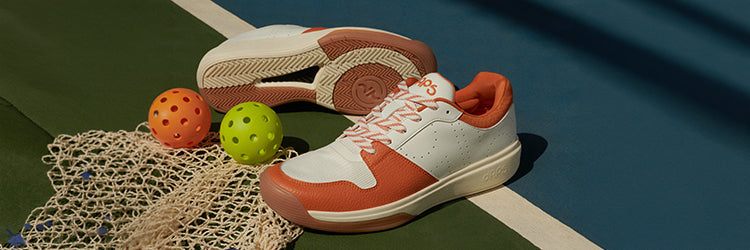
The outsole pattern makes a significant difference. CNC-cut herringbone treads are more precise than stamped rubber patterns because they create sharper grooves. Sharper grooves bite into the court surface more effectively during lateral pushes and quick stops, giving you a grounded, confident feel.
Non-marking rubber is also important. Most indoor courts and many recreational facilities require non-marking soles to protect the court surface. A shoe that leaves black streaks will get you asked to leave, so it is worth checking before you play. Quality pickleball shoes use rubber compounds that grip hard without marking.
What Is Lateral Stability and Why Does It Matter for Men Playing Pickleball
Lateral stability refers to a shoe's ability to support the foot when you push sideways rather than forward. During a game of pickleball, you are constantly pivoting, shuffling, and cutting at sharp angles. Without lateral support, the upper part of the shoe can roll or flex during these movements, which reduces your control and increases the physical demand on your ankle and arch.
A carbon fiber shank in the midsole is one of the most effective tools for solving this. Carbon fiber is both lightweight and rigid, so it guides the foot through angle changes without adding bulk. Combined with a structured upper and a grippy outsole, it creates a shoe that feels planted and responsive even during the most demanding rallies.
How Should a Men's Pickleball Shoe Fit for Best Performance
The ideal fit for a court shoe is snug but not tight. Your heel should sit firmly against the back of the shoe with minimal slippage, and your toes should have enough room to spread naturally without pressing against the front. A toe box that is too narrow forces your toes together, which affects balance and can cause discomfort over long sessions.
Most men find that pickleball shoes fit similarly to their standard athletic shoe size. If you prefer a slightly roomier feel in the forefoot, going up half a size is a safe approach. The Blumaka NonSlip insole inside DAPS shoes uses a contoured shape that helps dial in a secure fit regardless of minor sizing differences.
For men coming from other court sports, it is worth noting that different brands size slightly differently. DAPS shoes are designed for a true-to-size fit using precision lasts developed with Heeluxe, a biomechanics testing lab, so there is less guesswork involved.
Does Shoe Durability Actually Vary Between Pickleball-Specific and General Court Shoes
Yes, and the difference becomes obvious after a few months of regular play. Pickleball involves a lot of drag stops and short lateral slides that grind the outsole in specific zones, particularly the toe cap area and the medial midfoot. Shoes that were not designed for this wear pattern will break down faster in those spots.
Reinforced high-wear zones, medial rubber wrapping, and abrasion-resistant upper materials are features that extend the lifespan of a shoe through the specific stresses pickleball places on it. DAPS designs its outsoles with these zones in mind, and many players report consistent performance well beyond six months of competitive use.
Final Takeaway
Good shoes for pickleball men are not a luxury. They are a direct investment in how well you move, how long you can play, and how comfortable your feet feel after a tough session. The right pair gives you grip when you push off, stability when you cut, and cushioning that keeps your energy up through long rallies.
DAPS was built from the ground up for exactly this. Their DESI line, available in both low-cut and mid-cut styles, brings together lab-tested cushioning, precision court grip, and carbon fiber stability in a package that serious men's pickleball players trust. Whether you are just getting started or you have been playing for years, DAPS gives you a shoe that was designed for the demands of your game. Explore the full collection at DAPS.

Leave a comment
This site is protected by hCaptcha and the hCaptcha Privacy Policy and Terms of Service apply.