


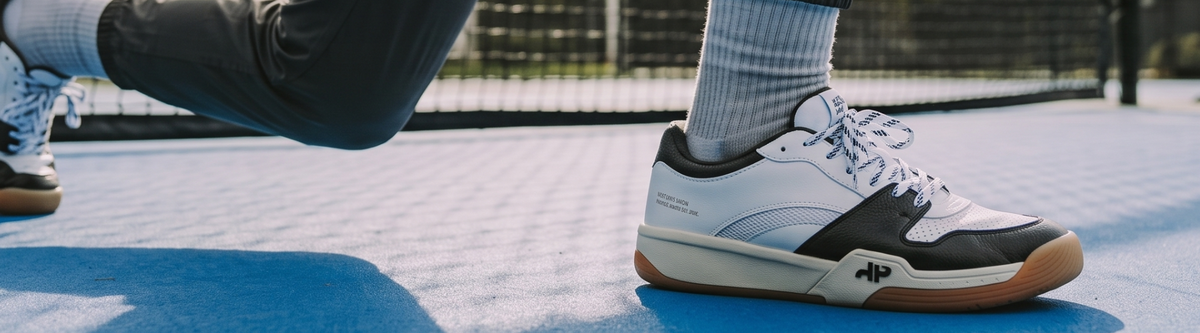
Pickleball looks simple from the sideline, but the footwork is anything but. Players shuffle, plant, and cut in tight spaces near the kitchen line, then reset for the next shot in a fraction of a second. That mix of quick lateral movement and sudden stops is very different from what running shoes or tennis shoes were designed to handle.
A lot of players start out in whatever athletic shoes they already own, since it feels like a reasonable place to begin. The problem shows up over time, in the form of sliding heels, tired ankles, or a shoe that just doesn't feel locked in during a fast exchange. Understanding how each shoe type is actually built helps explain why that happens.
This guide breaks down running shoes, tennis shoes, and pickleball-specific shoes by their build. It also covers what to look for if you're shopping for your first real pair, and where DAPS fits into that picture as a shoe designed specifically around pickleball's movement patterns.
Why Does Shoe Type Matter So Much in Pickleball?
Pickleball is played on a smaller court than tennis, which means points unfold at closer range and with less time to react. Players are constantly moving laterally to cover the kitchen line, then recovering to a ready position. A review of US emergency department visits from 2001 to 2017 found that the lower extremity was the single most commonly injured body region in pickleball, ahead of the upper extremity and trunk.
That pattern lines up with what the sport asks of your feet and ankles. Sports physical therapy research describes a quick step in any direction followed by an immediate return to the ready position as a defining, essential movement in racket sports like pickleball.
Are Running Shoes a Good Choice for Pickleball?
Running shoes are built for one dominant direction: forward. The midsole is shaped to cushion a heel-to-toe stride, and many models include a rocker or curved sole that helps propel you ahead with each stride. That same shape can feel unstable the moment you plant hard and cut sideways.
The outsole tells a similar story. Running shoes typically use a tread pattern designed to grip pavement or trail surfaces in a straight line, not to hold an edge during a quick lateral stop. The upper is also usually softer and less structured, since it doesn't need to resist side-to-side forces the way a court shoe does.
Are Tennis Shoes a Better Fit for Pickleball?
Tennis shoes are a closer match than running shoes, since they're at least built for a court. But tennis is played across a much larger area, with longer rallies, wider slides, and more moderate direction changes spread over more distance. Pickleball happens in a tighter box, with sharper, more frequent cuts packed into a shorter span of time.
That difference shows up in the build. Tennis shoes are often designed with more cushioning for long baseline rallies and a tread pattern suited to sliding through a wider stance. Pickleball's quicker, tighter footwork calls for a lower profile, a firmer lateral platform, and a tread designed for short, sharp stops rather than long slides.
What Makes a Pickleball-Specific Shoe Different?
A shoe built specifically for pickleball starts from the movement itself, not from another sport's requirements. That usually means a lower, more stable base to keep your center of gravity closer to the court during fast direction changes. It also means a midsole tuned for multidirectional loading, not just forward cushioning.
Lateral support is another key piece. Many pickleball-specific shoes include a stiffer shank or structured midfoot to help control the foot during hard cuts, along with a reinforced upper that keeps your foot from sliding inside the shoe. The outsole tread is also cut differently, with a pattern designed to grip through quick pushes and stops rather than long forward strides.
Ankle support is where low-top and mid-top options start to differ. A low-top design keeps things lightweight and lets the ankle move freely, which some players prefer for speed. A mid-top design adds structure around the ankle and heel, which can appeal to players who want extra lockdown during aggressive lateral play.
What Should You Look for When Choosing a Pickleball Shoe?
A few features consistently separate a court shoe built for pickleball from one that was borrowed from another sport:
- Non-marking grip: An outsole designed to bite into the court surface during quick stops, without leaving marks on indoor courts.
- Lateral stability: A stiffer midfoot or supportive shank that helps control side-to-side movement during sharp cuts.
- Cushioning built for multidirectional movement: Foam and platform shaping that supports lateral loading, not just forward strides.
- A comfortable, well-shaped toe box: Enough room at the front of the shoe so your toes aren't cramped during quick pivots and forward lunges.
Which Shoes Are Actually Built Around These Needs?
DAPS designed the Desi Low and Desi Mid specifically for pickleball's movement patterns, rather than adapting a shoe from tennis or running.
Both models share an ETPU midsole tuned for energy return during quick sprints and shuffles, a carbon fiber shank for lateral stability through hard cuts, and a CNC-cut rubber outsole built for grip during quick stops.
Each pair also includes a Blumaka NonSlip Insole and a true-to-size fit with a comfortable toe box, with the option to size up half a size for a roomier feel up front.
DAPS has had its Desi line lab-tested at Heeluxe Performance Lab, reporting better energy return and energy efficiency compared to other shoes on the market.
Choosing between the two comes down to personal preference for support versus freedom of movement. Either way, both are built around the same lateral stability, traction, and cushioning demands this guide has covered.
Final Takeaway
Shoe type isn't a minor detail in pickleball. Running shoes are built for forward motion, tennis shoes are built for a bigger court, and neither is shaped around the tight, fast, multidirectional footwork this sport actually demands. Knowing what to look for, non-marking grip, lateral stability, purpose-built cushioning, and a comfortable toe box, makes it much easier to choose a shoe that actually matches how you move.
DAPS built the Desi Low and Desi Mid around those exact requirements from the ground up, instead of adapting a shoe designed for another sport. Whether you want the lighter, more mobile feel of the Desi Low or the added ankle structure of the Desi Mid, both are built to support the way pickleball is actually played, dink by dink, cut by cut.
FAQs
What's actually wrong with wearing tennis shoes on a pickleball court?
Tennis shoes aren't a poor choice, but they're built for a bigger court with longer rallies and wider slides. Pickleball's tighter, sharper footwork is better served by a shoe built around that specific movement pattern.
Do pickleball-specific shoes really make a noticeable difference?
Many players notice a difference in stability and comfort once they switch, especially during fast lateral exchanges near the kitchen line. The build of the outsole, midsole, and upper all play a role in how a shoe handles those movements.
How do I know if a pickleball shoe fits correctly?
Look for a snug heel with no slipping, secure lateral support through the midfoot, and a toe box that's comfortable rather than cramped during a lunge. If you prefer extra room up front, most pickleball shoe brands, DAPS included, recommend sizing up half a size.

Leave a comment
This site is protected by hCaptcha and the hCaptcha Privacy Policy and Terms of Service apply.