


Key Takeaways
- Lateral support and court grip are the two most critical features court surfaces demand, as they require quick directional changes, so your shoes must prevent ankle roll while keeping you planted.
- Court type affects your choice - hard courts require maximum cushioning for impact absorption, while clay courts prioritize sliding control and lateral stability.
- Forefoot flexibility prevents foot fatigue - court shoes with stiff midsoles cause strain during rapid side-to-side movements, so choose shoes with responsive, not rigid, support.
- Durability and replacement timing matter - most quality court shoes last 6-12 months with regular play; inspect tread and support regularly and replace when grip or cushioning degrades.
- Moisture management prevents blisters and injuries - breathable uppers and moisture-wicking interiors keep your feet dry, reducing hot spots and reducing injury risk during long matches.
Picking the right pickleball court shoes is one of the most overlooked decisions players make. Your shoes connect you to the court, affect your speed, stability, and comfort during play. The wrong pair can lead to blisters, ankle strain, and poor performance, while the right pair transforms your game. Whether you're a beginner hitting the courts for the first time or a competitive player fine-tuning your gear, choosing court shoes requires understanding what features actually matter on the pickleball court.
This guide walks you through the essential features to look for, how different court surfaces affect your choice, and what happens when you wear the wrong shoes. We will break down the science behind lateral support, court grip, and cushioning so you can make a confident decision. By the end, you'll know exactly what to prioritize when shopping for your next pair.
Let's start with the foundation: what makes a shoe a court shoe instead of a regular athletic shoe.
What Key Features Should You Look For in Pickleball Court Shoes
Not all athletic shoes are court shoes. Court shoes are specifically engineered for lateral movement, quick stops, and rapid directional changes. Here are the non-negotiable features:
Lateral Support and Ankle Stability

Your ankles are constantly shifting during pickleball as you move side to side, forward, and backward. A quality court shoe has a reinforced heel counter and a snug midsole that prevents your foot from rolling inward or outward. This support reduces the risk of ankle sprains and gives you confidence to move aggressively toward the net. Look for shoes with gusseted tongues that keep your foot centered and prevent excess side-to-side slipping. Without proper lateral support, every sudden movement puts stress on your ankle ligaments, which compounds over time and increases injury risk.
Court Grip and Sole Design
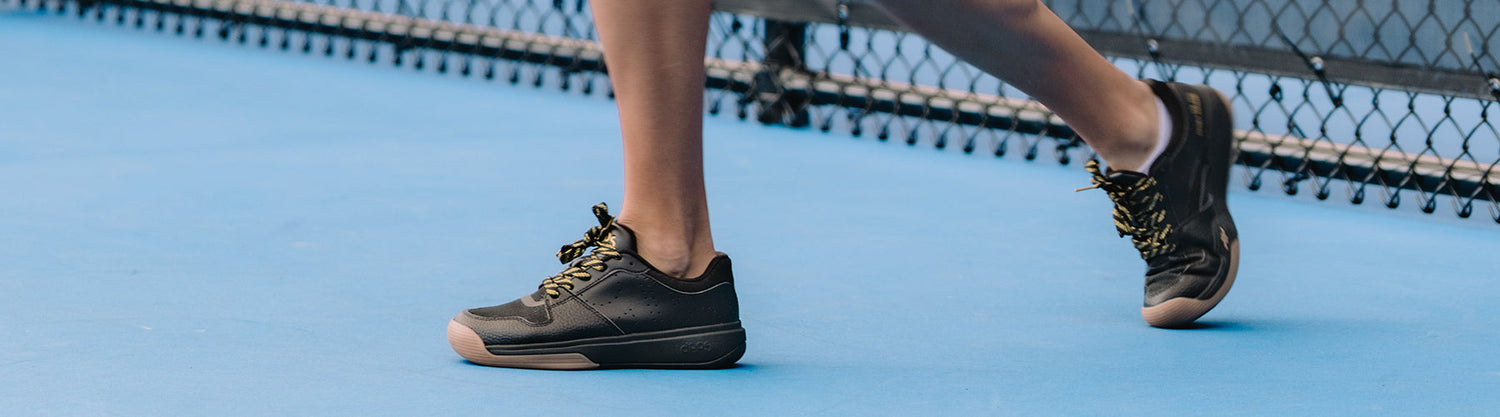
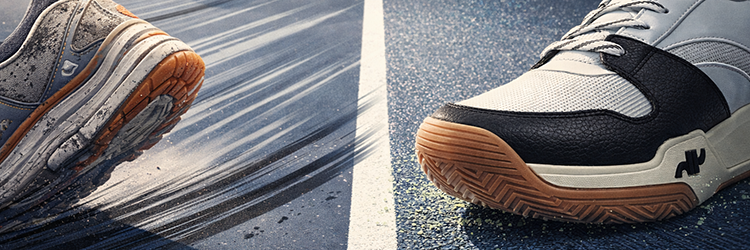
The tread pattern on the sole is your connection to the court. Herringbone patterns or modified grid patterns grip better than smooth soles because they create friction without catching on the court. You want a shoe that plants firmly during explosive movements but doesn't stick so much that it causes your foot to twist. Worn tread degrades grip significantly, so inspect your soles regularly. A shoe with premium rubber compounds maintains grip longer than cheaper alternatives, which matters when you're playing multiple times per week.
Forefoot Flexibility
Your forefoot (the area from your arch to your toes) needs to flex naturally as you push off during forward movement. A midsole that's too stiff restricts this motion and causes your foot muscles to work harder, leading to fatigue and soreness. The best court shoes flex at the ball of your foot, where your weight naturally bends the shoe. This flexibility allows you to move quickly and efficiently without exhausting your feet during long matches. Overly rigid shoes force your foot to work against the shoe rather than with it.
Cushioning and Impact Protection
Court shoes sit between running shoes (heavily cushioned) and minimalist shoes (very little cushioning). You need enough padding to absorb the impact of jumping, lunging, and stopping, but not so much that you feel disconnected from the court. The midsole should feel responsive rather than soft. Research found that proper midsole cushioning can reduce impact forces by up to 30%, helping lower injury risk.
Foam that's too mushy compresses over time and loses its protective qualities quickly. Mid-range cushioning technology like gel inserts or EVA foam provides the balance most court players need to stay comfortable during 90-minute matches without sacrificing court feel.
Breathability and Moisture Management
Pickleball involves constant movement and competitive intensity, so your feet sweat. Shoes with mesh uppers and moisture-wicking insoles prevent sweat buildup, which reduces blisters and keeps your feet cool. Poor moisture management creates a wet environment where friction increases, and your foot shifts inside the shoe, both leading to discomfort and potential injury. Quality court shoes use breathable materials throughout the upper while still providing the support you need.
How Do Court Shoe Features Impact Your Game Performance

The features we just discussed aren't just comfort preferences; they directly affect how well you play. Here's how each element translates to on-court results.
Stability Enables Aggressive Play
Strong lateral support lets you commit fully to lunges and net rushes without worrying about your ankle stability. Players wearing shoes without adequate support become tentative, missing opportunities because they're protecting their feet rather than attacking the ball. When you trust your shoes, your movement becomes faster and more confident. This confidence translates directly to better positioning and shot execution.
Grip Improves Shot Consistency
Consistent court grip means your feet stay planted during your stroke. Without good traction, your base shifts slightly during your swing, throwing off your shot accuracy. Players on courts with worn tread often find their mechanics inconsistent because the ground beneath them is literally shifting. Fresh tread and quality grip patterns keep your foundation solid, improving shot placement and reducing unforced errors.
Forefoot Flexibility Increases Court Speed
Your ability to push off quickly and change direction rapidly depends on forefoot flex. Shoes that restrict this motion slow you down because your foot has to work against the shoe structure. Players in overly stiff shoes fatigue faster because they have to use extra muscle effort to move. Flexible shoes let your natural movements happen without resistance, making you faster and more efficient over 2-3 hours of play.
What About Fit, Sizing, and Comfort
The most technically advanced shoe will fail if it doesn’t fit properly. Fit is individual and depends on your foot shape, arch type, and personal preference.
Heel and Midfoot Fit
Your heel should feel snug without squeezing. A loose heel causes slipping during lateral movements, while a tight heel creates blisters. The midfoot (arch area) should feel supported without pressure. Some players have high arches and need extra support, while others have flat feet and need different arch profiles. It's worth trying multiple models because shoe brands vary significantly in how they fit different foot shapes. A half-size difference can change the entire feel of a shoe.
Toe Box Space
You need about a thumb's width of space between your longest toe and the shoe's end. Too much space causes your foot to slide, reducing control. Too little space cramps your toes and causes pain during explosive movements. This matters more than it sounds. Many players buy shoes that are too tight, thinking it improves stability, when really it just causes blisters and reduces performance. The toe box should be roomy enough to accommodate your natural foot position without excess movement.
How Do Different Court Surfaces Affect Your Shoe Choice
Not all pickleball courts are the same, and your shoe choice should reflect where you play most.
Hard Courts
Hard courts (concrete and asphalt) create the most impact. Every jump, stop, and lunge sends shock through your legs and joints. Choose shoes with responsive cushioning that absorbs this impact without feeling mushy. The herringbone tread pattern works well on hard courts because it provides reliable grip without catching. Since hard courts are the most common surface, most quality court shoes are optimized for hard-court play, making these shoes widely available and diverse in style and price.
Clay Courts
Clay surfaces are softer and more forgiving on impact, but they demand different grip characteristics. Your shoe needs to grip the clay when you plant your foot but still allow controlled sliding when you're adjusting your position. Excessive grip causes your foot to catch, potentially leading to ankle injuries. Clay-specific shoes often have more open tread patterns and slightly more flexible soles than hard-court shoes. If you play primarily on clay, your shoe choice becomes more specialized.
Hybrid or Indoor Courts
Indoor courts vary widely in surface composition. Most indoor courts are hard surfaces (like gym floors or acrylic), so hard-court shoes work well. The advantage of indoor play is that court conditions are consistent, so you don't need to adjust your gear seasonally. If you play in multiple locations with different surfaces, choose shoes that perform acceptably on hard courts (where most of the game is played nationally).
Where Can You Find Quality Pickleball Court Shoes
Specialty athletic retailers, online marketplaces, and dedicated pickleball gear companies all carry court shoes. The key is finding retailers that specifically stock pickleball or court-sport shoes, because they tend to carry the most purpose-built options. Generic athletic shoe websites sometimes misclassify court shoes, so verify that what you're buying is actually designed for lateral court sports.
Try Before Buying
If possible, try shoes on in person at a specialty sports retailer. Staff at these locations understand court-shoe features and can help identify shoes that match your foot shape and playing style. If you're buying online, check return policies and be willing to exchange if the first pair doesn't fit right. Online communities and local pickleball groups can also provide recommendations based on their experience with specific models.
DAPS: A Trusted Option
When shopping for court shoes, look for brands specifically engineered for lateral sports like pickleball. DAPS specializes in court footwear and understands the demands of recreational and competitive players. Our shoes are built with the features we've discussed: responsive cushioning, reliable grip, strong lateral support, and breathable materials. Shopping for shoes from brands focused on court sports ensures you're getting footwear designed with your game in mind, not just generic athletic shoes adapted for court play.
Final Takeaway
Choosing the right pickleball court shoes isn't as complicated as it seems when you focus on the features that matter: lateral support, court grip, forefoot flexibility, and breathability. Your shoes are the foundation of your game, affecting your speed, stability, confidence, and injury risk. Take time to understand what your feet need, try multiple options, and prioritize fit over brand loyalty. Invest in quality shoes designed specifically for court sports, and you'll immediately notice improvements in your movement, comfort, and on-court performance. Replace your shoes before they completely wear out, and you'll maintain that peak performance consistently. The right court shoes transform not just how you play, but how you feel playing pickleball.
About DAPS Court Footwear
If you're ready to upgrade your court game, DAPS specializes in engineered court footwear built for recreational and competitive players alike. Every pair is designed with the features discussed in this guide: responsive cushioning, reliable grip, lateral support, and breathable materials. Whether you're new to pickleball or a seasoned player, DAPS offers shoes that keep your feet comfortable and your performance consistent. Visit us to explore our collection and find your perfect court shoe.

Leave a comment
This site is protected by hCaptcha and the hCaptcha Privacy Policy and Terms of Service apply.