


If you came to pickleball from volleyball, this question probably crossed your mind the first time you laced up for a match: can you just wear your old volleyball shoes? The honest answer is that you can, technically, step onto the court in them.
Nobody is going to stop you. But volleyball shoes and pickleball shoes are built to answer two different questions, and that difference shows up the moment you plant your foot to chase a dink or scramble back for a lob.
Volleyball rewards a shoe that helps you jump and land, again and again, on a predictable indoor surface. Pickleball asks something else entirely: constant lateral cuts, sudden stops, and quick changes of direction, often on outdoor or hard courts.
That mismatch is exactly why brands like DAPS design shoes around pickleball's specific movement pattern instead of borrowing a shoe built for a different sport.
This article breaks down what volleyball shoes actually get right, where they fall short on a pickleball court, and what to look for if you're ready to switch to something built for the game you're actually playing.
What Are Volleyball Shoes Actually Built For?
Volleyball shoes are engineered around one dominant movement: the vertical jump. The midsole cushioning is tuned to absorb repeated landings, and the upper is built to support the foot through take-off and touchdown rather than through a hard sideways plant.
Most volleyball is played indoors on polished hardwood or synthetic court surfaces, so the outsole rubber and tread pattern are optimized for grip on that specific, consistent surface.
None of this makes volleyball shoes poorly made. It just means every design choice, from the sole compound to the cushioning response, points toward jumping and forward-back movement rather than lateral agility.
What Does Pickleball Really Ask From a Shoe?
Pickleball is a different movement puzzle. Points are built on quick lateral shuffles, hard stops at the kitchen line, and sharp changes of direction as you cover a smaller court with a partner. Unlike volleyball, much of that movement happens low to the ground rather than in the air, which puts sustained, repeated stress on the ankle and the sides of the foot rather than on landing mechanics.
Court surface adds another layer. Plenty of pickleball is played outdoors on concrete or asphalt, or on multi-purpose hard courts, which are rougher and less forgiving than a polished indoor gym floor. A shoe built for pickleball has to grip and support the foot through that lateral load, on that kind of surface, match after match.
Where Volleyball Shoes Fall Short on a Pickleball Court
Outsole Pattern Mismatch
Volleyball outsoles are patterned for grip on smooth, indoor hardwood, where the main need is traction under a jump. Pickleball courts, especially outdoor ones, need a tread pattern that can bite into a rougher surface and hold during a hard lateral push. When the tread doesn't match the surface and movement, you get less predictable grip exactly when you're cutting hardest.
Lateral Support Gap
A volleyball shoe's upper and midsole are reinforced to handle vertical loading, not repeated side-to-side loading. Pickleball's constant direction changes ask the shoe to stabilize the foot laterally, over and over, for the length of a match. Without that lateral reinforcement built in, more of that stabilizing work falls on your ankle and lower leg.
Cushioning That Responds to the Wrong Movement
Cushioning foam in a volleyball shoe is tuned to compress and rebound under a straight-down landing force. A hard lateral cut loads the foam differently, from the side rather than from below, and cushioning that wasn't designed for that angle can feel less stable and less responsive under a quick pivot.
What This Means for Your Ankles and Your Soles
This mismatch isn't just about comfort. Peer-reviewed research on pickleball-related foot and ankle injuries has identified foot inversion (the ankle rolling inward during lateral movement) as one of the recorded mechanisms of injury in players treated for pickleball-related injuries.
Sports medicine specialists at McGovern Medical School similarly note that ankle sprains are among the most common pickleball foot and ankle injuries, and that they typically happen when the foot rolls inward during lateral movement, which is why they recommend court-specific shoes with strong lateral support.
To be clear, no shoe can guarantee you won't roll an ankle or slip on a court. What footwear built for lateral movement can do is give your foot a more stable base to work from during the exact motion pickleball asks for most. On the wear side, a tread pattern designed for the wrong surface also tends to break down faster outdoors, since it's absorbing forces and surface contact it wasn't shaped for.
What a Pickleball-Specific Shoe Looks Like Instead
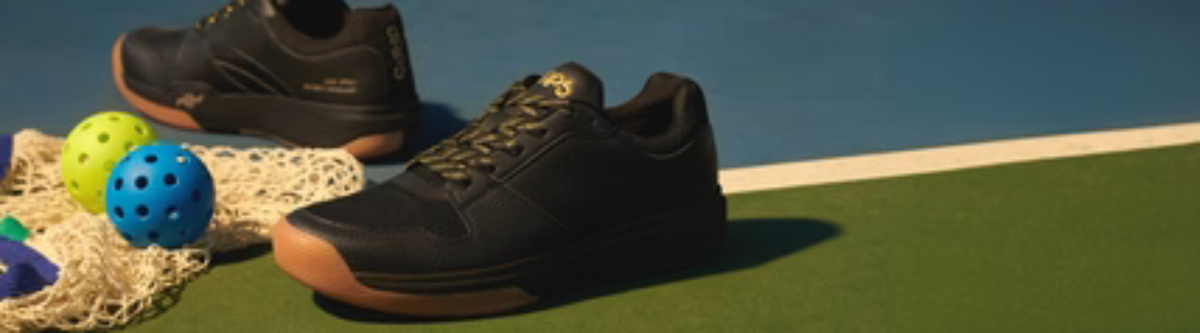
This is exactly the gap DAPS built the Desi line to close. Instead of adapting a shoe from another sport, DAPS starts with pickleball's stop-start, lateral movement pattern as the design brief.
- Carbon fiber shank: adds structure through the midfoot to support the foot during sharp direction changes, rather than only through a vertical landing.
- CNC-cut, non-marking tread: shaped specifically for grip during pushes, cuts, and sudden stops, and built to work across different court surfaces without marking them up.
- Blumaka non-slip insole: designed to keep the foot locked in place for a stronger drive during quick lateral movement.
- ETPU foam cushioning: softens landings and aims for a light, steady feel through long play.
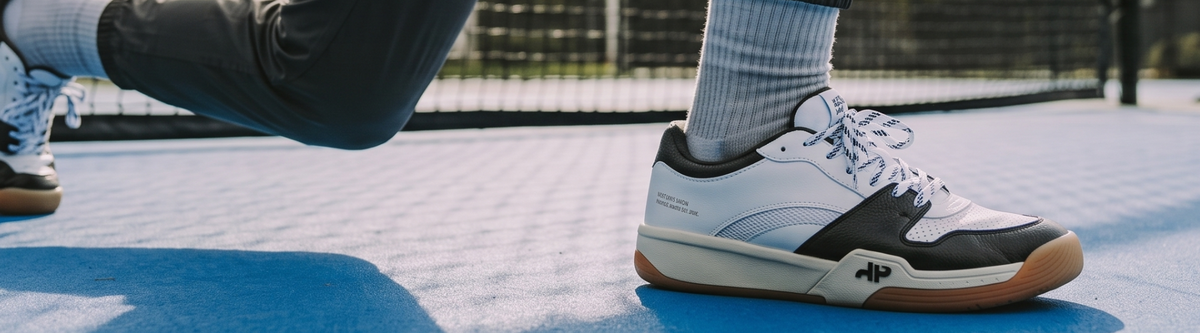
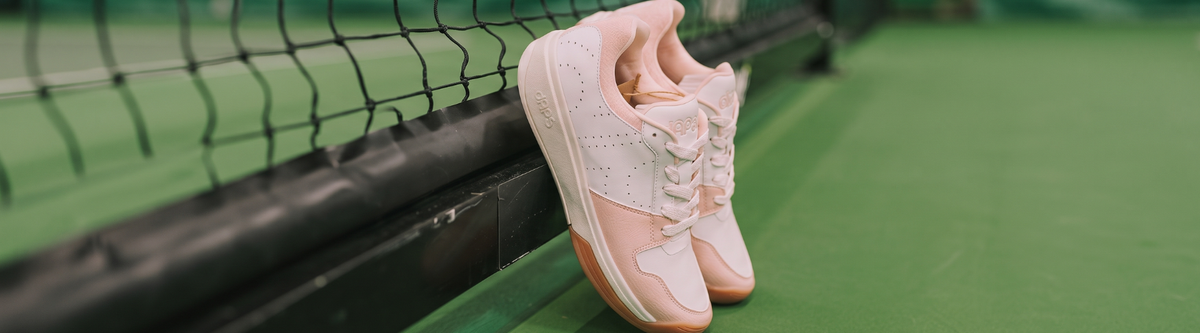
Whether you're drawn to the low-profile Desi Low or prefer the Desi Mid, both are built around the same idea: a shoe should match the sport you're actually playing on the court you're actually playing it on.
Final Takeaway
Volleyball shoes aren't a bad shoe, they're just built for a different game. The jump-and-land demands of volleyball and the constant lateral cutting of pickleball ask two very different things of a sole, a midsole, and a shoe's support structure. If you're playing pickleball often, that mismatch is worth paying attention to, not because any shoe can promise you'll never slip or get hurt, but because footwear built around your sport's actual movement pattern gives your feet a better foundation to work from.
That's the thinking behind DAPS. The Desi Low and Desi Mid are engineered specifically for pickleball's stop-start, side-to-side demands, from the carbon fiber shank and CNC-cut non-marking tread to the Blumaka non-slip insole underfoot. If your current shoes were built for a different sport, it may be time to check out a pair built for the one you're actually playing.
FAQs
Why do my ankles feel strained after playing pickleball in volleyball shoes?
Volleyball shoes are built to support vertical jumping and landing, not repeated side-to-side cuts. Pickleball leans heavily on lateral movement, so a shoe without built-in lateral support asks more of your ankles and lower leg to stabilize that motion on their own.
What's the difference between a volleyball shoe sole and a pickleball shoe sole?
A volleyball outsole is patterned for grip on smooth indoor hardwood under a jump. A pickleball outsole, like the CNC-cut tread on DAPS shoes, is shaped to grip during pushes, stops, and direction changes, often across both indoor and outdoor surfaces.
Do volleyball shoes work on outdoor pickleball courts?
They can be worn outdoors, but volleyball soles are generally designed with indoor gym floors in mind. On outdoor concrete or asphalt, that mismatch can mean less predictable traction and quicker tread wear.
What should I look for when switching to pickleball-specific shoes?
Prioritize lateral support through the midfoot, a tread pattern built for stop-start movement, and cushioning designed for multi-directional loading rather than straight-down impact. The DAPS Desi Low and Desi Mid are built around exactly this combination, for men and women.

Leave a comment
This site is protected by hCaptcha and the hCaptcha Privacy Policy and Terms of Service apply.