


Key Takeaways
- Court-specific grip patterns are essential for safe, confident movement on both indoor and outdoor surfaces.
- Lateral stability matters more in pickleball than in most sports because of the frequency of side-to-side movement.
- Cushioning should balance court feel with impact protection, especially for hard-court play.
- Durability depends heavily on outsole material quality, particularly for outdoor courts that wear down soles faster.
- Fit and support around the midfoot and ankle reduce fatigue and help maintain control during long matches.
Pickleball is one of the fastest-growing sports in the world, and your footwear plays a bigger role in your performance than most players realize. The right shoe can help you move more confidently on the court, support your joints during quick lateral cuts, and keep you comfortable through long sessions. The wrong shoe can do the opposite.
This guide breaks down every quality that matters in a pickleball shoe, from grip and court traction to cushioning, fit, and durability. Whether you play indoors, outdoors, or both, understanding these features helps you choose footwear that genuinely works for your game.
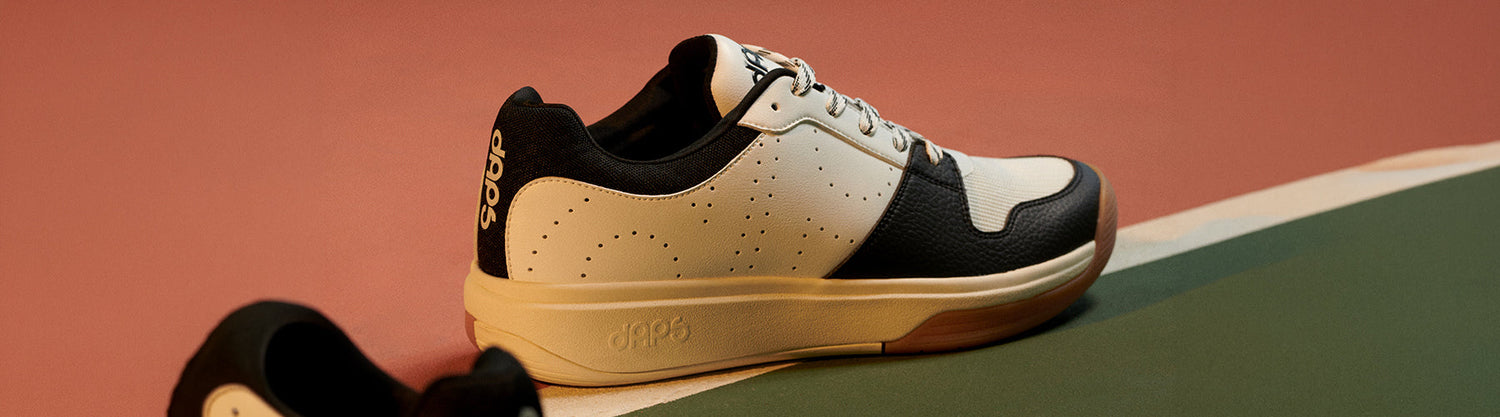
At DAPS, we build court shoes specifically designed for the demands of pickleball. Every feature discussed in this article is something we have carefully considered and built into our footwear lineup at DAPS.
Why Does Grip Matter So Much in Pickleball
Grip is the foundation of everything you do on a pickleball court. Every sprint to the kitchen, every retreat to the baseline, every pivot to reach a wide ball, all of it starts with how well your shoe connects to the court surface.
A shoe with poor grip will slip under pressure, especially during lateral cuts or when you need to stop suddenly. This not only affects your shot quality but also puts extra strain on your knees and ankles as your body compensates for unstable footing.
A good grip in a pickleball shoe comes from the tread pattern on the outsole. Herringbone and modified herringbone patterns are widely used in court sports because they grip in multiple directions, which is exactly what pickleball demands. A shoe designed for running or cross-training typically uses a forward-motion tread that does not perform the same way on a court surface.
DAPS pickleball shoes are engineered with court-specific outsole patterns that give you grip in all directions, so you can plant, push, and pivot with confidence.
How Does Court Traction Differ Between Indoor and Outdoor Play
Court traction is closely related to grip, but it is specifically about how the outsole interacts with different surface types. Indoor and outdoor courts create very different demands on your shoes.
Indoor courts, typically made from wood or synthetic materials, require a non-marking rubber outsole with fine tread patterns. These surfaces are smooth, and the shoe needs to grip gently without squeaking or leaving marks. Too aggressive a tread on an indoor surface actually reduces traction because less rubber makes contact with the floor.
Outdoor courts, usually made from asphalt or concrete, are rough and abrasive. They demand a thicker, harder rubber outsole with deeper grooves. The grit of the surface provides grip, so the shoe needs to endure constant contact with a material that wears down soles quickly.
Wearing an indoor shoe outdoors, or vice versa, leads to poor traction and dramatically shortened shoe life. If you play both surfaces regularly, look for a shoe built to handle both, or invest in a pair for each. DAPS offers options suited to both court environments, with outsole technology matched to each surface type.
What Role Does Lateral Stability Play in Pickleball Footwear
Research shows that lateral movement in court sports is significantly more frequent than forward running. In pickleball specifically, the compact court size means players are constantly moving side to side, making quick direction changes, and holding wide stances at the kitchen line.
Lateral stability refers to how well a shoe supports your foot and ankle when you push off sideways or land from a wide step. A shoe without proper lateral support allows your foot to roll inward or outward under these loads. Over time, this increases the risk of ankle rolls, knee strain, and general fatigue.
The features that create lateral stability include a wide, flat outsole base, a reinforced midfoot section, and firm sidewall support on the upper. A shoe that is too narrow or too flexible through the midsole will struggle to provide this kind of support.
DAPS designs its footwear with lateral court movement in mind. The stable base and structured upper give you the platform you need to push confidently in any direction without feeling like the shoe is working against you.
How Much Cushioning Do Pickleball Shoes Need
Cushioning in a court shoe is a balance. Too little, and hard court surfaces create impact fatigue that builds up over the course of a match or a session. Too much, and you lose the court feel that helps you react quickly and stay stable during lateral cuts.
Pickleball players spend significant time on hard surfaces, and repeated impact on the heel and forefoot adds up. A shoe with responsive cushioning absorbs shock at impact and returns some of that energy, keeping your legs fresher over time.
The key is that the cushioning should not feel spongy or unstable. Midsole foam that is too soft creates a rocking sensation that undermines lateral stability. The best pickleball shoes use firm, responsive foam that compresses just enough to absorb impact without sacrificing the solid platform you need for court movement.
DAPS footwear uses cushioning technology tuned specifically for court sports, giving you comfort across long sessions while keeping the responsive, stable feel that competitive pickleball requires.
Why Is Durability a Key Factor in Choosing Pickleball Shoes
A pickleball shoe that looks great but wears out quickly is not a good investment. Durability depends on material quality throughout the shoe, but the outsole is where most wear occurs, especially for outdoor players.
Outdoor court surfaces are abrasive, and a thin or soft rubber outsole will show visible wear within a few months of regular play. Durable pickleball shoes use reinforced rubber compounds in high-wear zones, particularly the toe drag area and the outer heel, where contact with the court is most aggressive.
The upper also needs to hold up to the stress of repeated lateral movements. Reinforced toe caps and overlays in high-stress areas extend the life of the shoe significantly. Stitching quality and the materials used in the tongue and collar also contribute to how well the shoe holds its structure over time.
Investing in a well-built shoe from the start saves money over time. DAPS prioritizes durable construction across its pickleball footwear range so that the shoe performs the same way in month six as it did on day one.
What Fit Features Should You Look for in a Pickleball Shoe
Fit is personal, but several specific fit characteristics matter for court sports. A pickleball shoe should feel snug through the midfoot without squeezing the toes. Too much room in the forefoot allows the foot to slide forward during quick stops, which creates blisters and reduces control.
The heel should sit firmly in the cup without slipping during movement. Heel slippage is a sign that the shoe is too large or that the heel counter is too soft. A firm, structured heel counter keeps the foot locked in place, which is critical for lateral stability and ankle support.
Lacing systems also affect fit. A well-designed lacing pattern lets you customize the fit across different parts of the foot, accommodating players who have a wider forefoot but a narrower heel, for example.
It is worth trying pickleball shoes on later in the day when your feet are slightly larger from daily activity, and wearing the type of socks you would use on the court. DAPS shoes are designed to fit performance court socks and provide a secure, comfortable feel throughout a full match.
How Does Support Differ for Indoor vs Outdoor Court Conditions
Support needs vary depending on the surface you play on. Indoor courts tend to be more forgiving underfoot, so a slightly lighter build can work well. Outdoor courts are harder and more demanding, so additional cushioning and a more robust outsole are beneficial. This is further supported by the difference in ball characteristics: outdoor balls tend to be harder and move faster, reaching 30 to 40 mph, which demands fast reaction times and equally quick movement patterns. A shoe built for outdoor conditions needs to support both the physical demands of harder surfaces and the faster-paced play that outdoor games typically require.
Beyond surface differences, the level of support you need also depends on your playing style. Baseline players who cover more ground benefit from extra cushioning and durability. Kitchen-line players who move more laterally and quickly need strong lateral support and a stable, low-profile base.
Some pickleball players use the same shoe for both indoor and outdoor play, which is possible with the right design. However, a shoe built specifically for one surface will always outperform a general-purpose option on that surface. DAPS offers footwear across both categories so players can find the right match for their primary court surface.
Final Takeaway
A good pickleball shoe is not just comfortable footwear. It is a performance tool designed around the specific demands of the sport. The right combination of grip, traction, lateral stability, cushioning, durability, fit, and surface-specific support can genuinely elevate your game.
Grip keeps you connected to the court. Traction matches your shoe to your surface. Stability supports your side-to-side movement. Cushioning reduces impact fatigue. Durability protects your investment. And a well-fitted shoe ties all of it together.
DAPS builds pickleball footwear with each of these qualities in mind. If you are ready to play with footwear that actually works for the sport, explore the full collection at DAPS and find the pair built for your game.

Leave a comment
This site is protected by hCaptcha and the hCaptcha Privacy Policy and Terms of Service apply.