


Key Takeaways
- Tennis shoes can work for occasional pickleball, but they are built around different movement demands than the sport requires.
- Pickleball involves shorter, faster lateral movements and more frequent direction changes than tennis, which calls for specific footwear design.
- The grip, cushioning, and weight of tennis shoes are calibrated for larger courts and longer strides, not the compact, reactive nature of pickleball.
- Dedicated pickleball shoes are engineered to match the sport's stop-start rhythm, tight pivots, and kitchen-line footwork.
If you play pickleball and already own a solid pair of tennis shoes, it is natural to wonder whether they will do the job on the pickleball court. Both sports use similar surfaces, involve lateral movement, and require sturdy footwear. So the question makes sense.
The short answer is that tennis shoes can work, particularly if you are just starting or play casually a few times a month. But if pickleball is becoming a regular part of your routine, the differences between the two sports start to matter more than you might expect.
Pickleball grew 223.5% over four years from 2020 to 2023, according to the Sports and Fitness Industry Association (SFIA) Topline Participation Report, as cited in the USA Pickleball 2023 Annual Growth Report.
This article breaks down what sets pickleball footwear apart from tennis footwear, covering grip, support, comfort, and court movement. By the end, you will have a clear picture of when tennis shoes are acceptable and when a dedicated pickleball shoe is the smarter choice.
How Do Pickleball and Tennis Movements Differ
Understanding why footwear matters starts with understanding how each sport actually moves.
In tennis, players cover a much larger court. Points often involve long sprints toward the baseline, lunging for wide balls, and then recovering ground quickly. The movement patterns are expansive, with frequent forward and backward running mixed with side-to-side adjustments.
Pickleball courts are significantly smaller. In doubles play, especially, players spend a large portion of time stationed near the kitchen line, making short shuffle steps, quick lateral shifts, and fast pivots to respond to dinks and drives.
Research shows that lateral movement in court sports can account for more than half of all directional changes during a match, and in pickleball, that proportion is even higher, given the compact playing area.
Are Tennis Shoes Good for Pickleball When It Comes to Grip
Grip is one of the first areas where the difference shows up clearly.
Tennis shoes are designed for a variety of surfaces, including hard courts, clay, and grass. Because of this, their outsoles tend to balance grip with some ability to slide, which helps tennis players who need to cover ground quickly and stop at longer distances.
Pickleball courts are almost always hard surfaces, either indoor gym floors or outdoor hard courts. On these surfaces, the ideal shoe provides firm, multidirectional traction that holds through tight pivots and quick stops. Pickleball shoes typically feature herringbone or multidirectional tread patterns that are purpose-built for this kind of grip.
When a tennis shoe's outsole is not optimized for this movement style, players may find that their feet slip slightly during sharp lateral changes or that stopping feels less controlled. On indoor courts, especially, the difference in how a shoe grips the surface becomes very noticeable.
How Does Lateral Support Compare Between Tennis and Pickleball Shoes
Lateral support is where the two shoe types diverge most significantly.
Because pickleball involves such frequent side-to-side movement, the outer sidewalls of a shoe take considerable strain. Players at the kitchen line are constantly shifting left and right in small, rapid increments. A shoe needs reinforced lateral support to keep the foot stable through those movements without the ankle rolling inward or the upper breaking down.
Tennis shoes do offer lateral support, but they are calibrated for wider, longer movements across a larger court. Pickleball shoes tend to be built lower to the ground in the forefoot, with elevated lateral sidewall profiles designed specifically for the shorter, tighter movements the sport demands.
Over time, wearing a shoe that is not built for this level of repeated lateral stress can lead to faster upper breakdown, reduced stability, and greater foot fatigue during long sessions. Pickleball tournaments and recreational sessions alike can run several hours, and the cumulative effect of unsupported lateral movement adds up.
What About Cushioning and Comfort for Long Pickleball Sessions
Comfort might seem like a minor point, but pickleball players often spend more consecutive time on the court than tennis players, particularly in recreational settings where games run back to back.
Tennis shoes are generally designed with cushioning that supports longer strides and heel-heavy landing patterns. They tend to be slightly stiffer and heavier, which makes sense for a sport that involves explosive sprints across a bigger court.
Pickleball shoes are typically lighter and use cushioning that is tuned for quicker, smaller movements and extended all-day wear. A more responsive midsole means energy is returned to the foot with each step, reducing fatigue during long sessions.
Wearing a heavier, stiffer tennis shoe during several hours of pickleball can result in foot fatigue that builds gradually, sometimes without players fully recognizing it until after they step off the court.
Does Shoe Weight Matter on the Pickleball Court
Weight is a factor that is easy to overlook but makes a real difference during fast-paced play.
Because pickleball shoes are designed for quick, repeated movements rather than long-distance sprints, they tend to be lighter than tennis shoes. A lighter shoe allows for faster foot placement and quicker recovery between steps. Pickleball-specific designs strip weight from areas that do not take heavy wear in this sport, keeping the shoe as agile as possible.
For players who are moving into competitive pickleball or playing multiple sessions per week, that reduction in shoe weight contributes to quicker reactions and less overall fatigue.
When Are Tennis Shoes Acceptable for Pickleball
Tennis shoes are a reasonable starting point under certain conditions.
If you are brand new to pickleball and playing once a week or less, a quality pair of tennis shoes will get you through the early learning phase without putting you at a serious disadvantage. Tennis shoes are far better for pickleball than running shoes, basketball shoes, or casual sneakers, which offer no meaningful lateral support at all.
If you already play both sports and are looking to use one pair across both, a hard-court tennis shoe is the most transferable option. The tread and support profile of hard-court tennis shoes overlap more with pickleball needs than clay or grass court tennis shoes.
The important thing to recognize is that as pickleball becomes a more regular part of your routine, the limitations of tennis shoes become more apparent. Performance, foot comfort, and long-term joint health all benefit from footwear that actually matches the movement demands of your primary sport.
When Should You Switch to Dedicated Pickleball Shoes
There are a few clear signals that it is time to move into dedicated pickleball footwear.
You are playing two or more times per week. At this frequency, your shoes take consistent lateral stress, and the right footwear starts making a measurable difference in how your feet feel at the end of a session.
You are playing in tournaments or competitive settings. In these situations, performance matters more, and the grip, weight, and lateral support of a purpose-built pickleball shoe give you a genuine edge.
You are noticing foot or ankle fatigue after games. This is often a sign that your footwear is not adequately supporting the demands being placed on it.
You are developing knee, ankle, or foot discomfort. While footwear is not the only factor in joint health, wearing shoes that are not matched to your sport's movement patterns can contribute to strain over time.
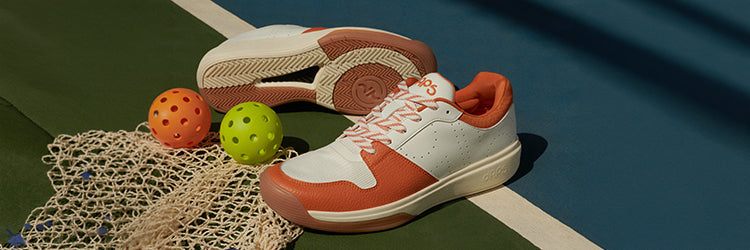
DAPS pickleball shoes are designed specifically for this transition. Unlike shoes that are adapted from other sports, DAPS built the DESI line from the ground up for pickleball, with features like Blumaka NonSlip insoles, ETPU cushioning for energy return, a carbon fiber support shank, and CNC-cut tread patterns for reliable grip through every cut and pivot.
The DESI Low offers a lightweight, agile profile for players who prioritize speed and footwork, while the DESI Mid adds ankle support for players who want additional stability without losing quickness.
Final Takeaway
Tennis shoes can get you started in pickleball, but they are not built for the sport. The more often you play, the more you will notice the gap between a shoe designed for long court coverage and one that is purpose-built for the quick, tight movements pickleball demands.
When you are ready to take your footwear as seriously as your game, DAPS offers a line of pickleball shoes built specifically for how this sport actually moves. The DESI Low and DESI Mid are engineered for the kitchen line, the sharp pivots, and the long sessions that define pickleball at every level. Visit DAPS to find the right pair for your game.

Leave a comment
This site is protected by hCaptcha and the hCaptcha Privacy Policy and Terms of Service apply.