


Key Takeaways
- Outdoor courts absorb far more heat than the air around them, so summer pickleball footwear has to handle a hotter, harder surface than winter or indoor sessions ever do.
- Breathable uppers matter more outdoors, since sun and sweat build up faster outside than they do in an air-conditioned gym.
- Lateral stability, not just forward cushioning, is what supports the quick pivots and direction changes pickleball demands.
Playing pickleball outdoors in summer is a different experience than playing indoors in the middle of winter. The court gets hot, the sun doesn't let up, and every dink, drive, and reset happens on a surface that behaves differently once the temperature climbs. Shoes that feel fine on an indoor gym floor can feel completely wrong on a sun-baked outdoor court by the second set.
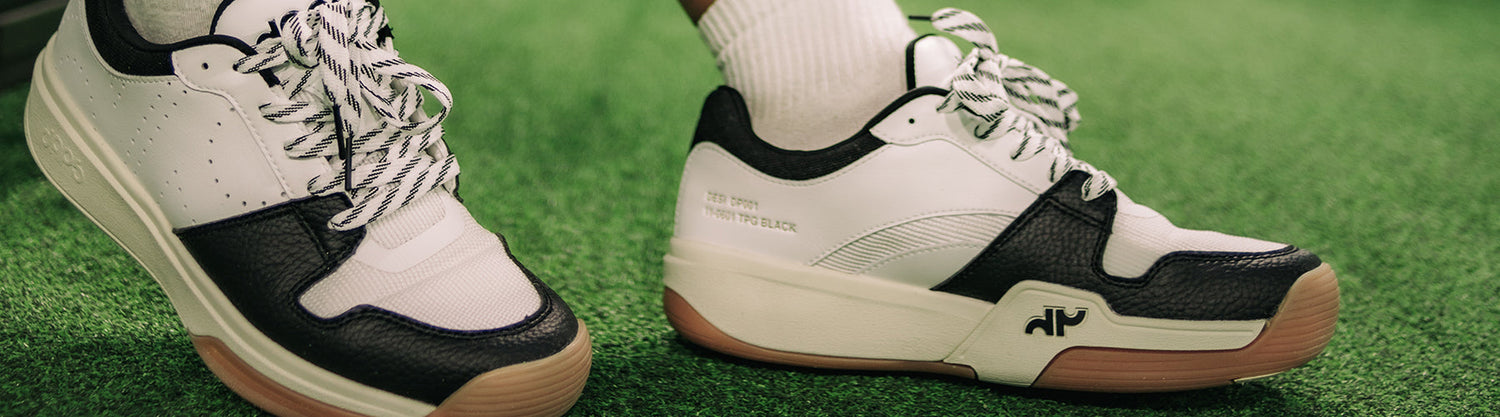
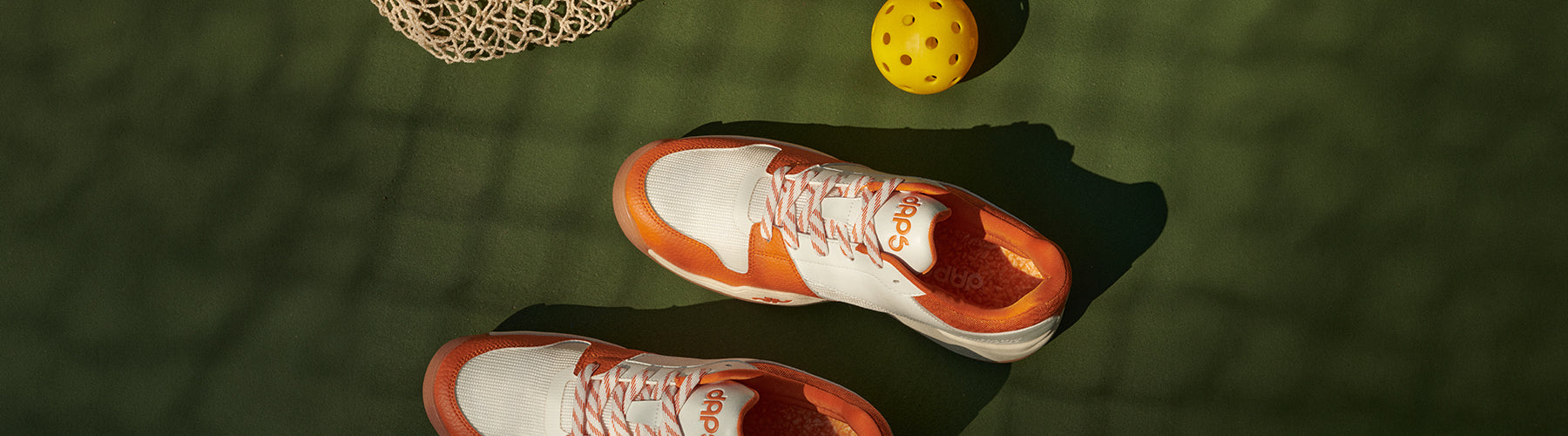
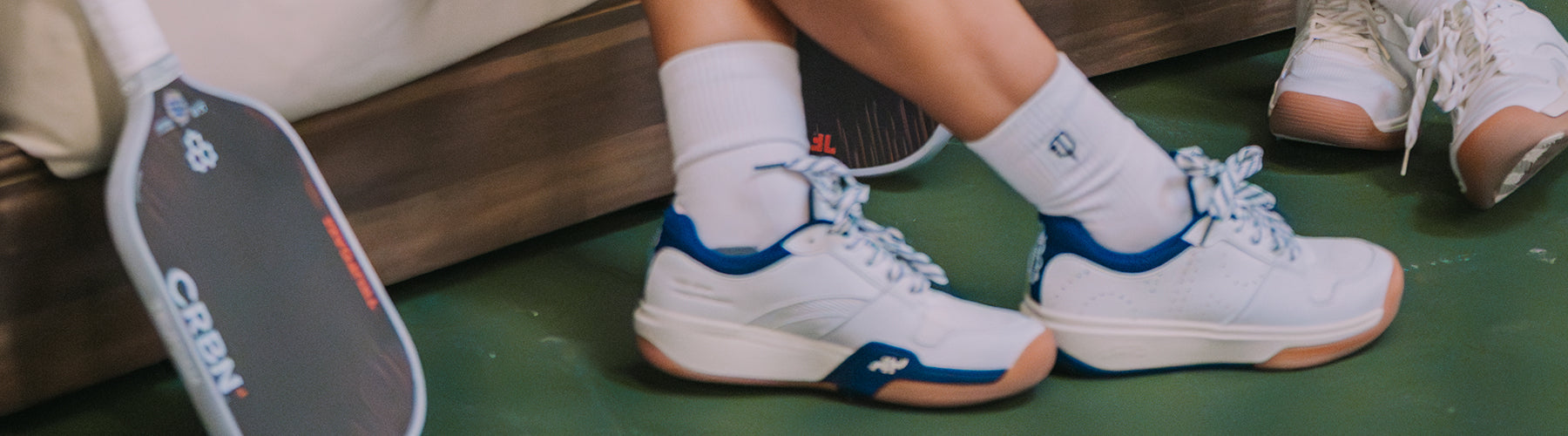
That gap is exactly what this guide focuses on: what outdoor summer play actually demands from a shoe, and why. We'll walk through grip, breathability, cushioning, and lateral support one at a time, the same way a shoe designer would think through them. Along the way, we'll look at how the Desi Low and Desi Mid, which DAPS built specifically for pickleball rather than adapting a shoe from another sport, line up with these demands.
Why Outdoor Summer Courts Are Tougher on Footwear Than Indoor Play
Outdoor hard courts don't just get warm in the sun; they get significantly hotter than the air around them. Research from the University of Georgia Extension found that on a 95°F day, blacktop surface temperatures can climb to around 140°F, while nearby grass in the shade stays closer to 105°F.
A shoe built for indoor courts, or borrowed from another sport entirely, isn't designed to hold up against that kind of surface heat for a two-hour session. Outsole rubber, midsole foam, and the materials holding a shoe together all respond differently once the court gets that hot.
Why Breathable Uppers Matter for Summer Sessions
Indoors, air conditioning does a lot of the work your shoe doesn't have to. Outdoors in the middle of summer, heat and sweat build up fast, and an upper made from dense, non-breathable material traps both. A breathable mesh upper lets air move through with every step, which helps keep feet cooler and reduces the kind of moisture buildup that leads to blisters and hot spots during longer outdoor sessions.
How Cushioning Should Handle Heat, Not Just Impact
Cushioning foam has two jobs outdoors: absorbing impact and staying comfortable as the shoe warms up in direct sun. Foam naturally responds to temperature changes, which is why players often notice a difference between indoor and outdoor play.
The DAPS Desi Low and Desi Mid feature an ETPU midsole engineered for energy return and durability, complementing the demands of extended pickleball sessions.
Why Lateral Stability Protects You During Quick Pivots
Pickleball's movement pattern is built around sudden stops and sharp direction changes, not straight-line running, and that's where a lot of the sport's most common injuries happen. A review of emergency department data found that sprains and strains made up roughly three-quarters of pickleball-related lower extremity injuries, with the ankle among the most frequently affected areas.
A separate orthopedic study found that ankle sprains from twisting movements were the most common lower extremity injury among pickleball and paddleball players treated at an outpatient clinic. No shoe can eliminate that risk, since footwear is only one part of how a body moves on court, but genuine lateral stability (not just forward cushioning) gives your foot more support during the pivots that put the most strain on the ankle.
How the DAPS Desi Low and Mid Are Built for These Exact Conditions
DAPS designed the Desi Low and Desi Mid specifically for pickleball, for both indoor and outdoor courts, rather than adapting a shoe built for tennis or running. Here's how a few of its specific features line up with the outdoor summer demands covered above:
- CNC-cut, non-marking rubber outsole: cut with more precision than a stamped mold, built to hold traction through pushes, stops, and sharp cuts on indoor and outdoor courts alike.
- ETPU midsole cushioning: engineered for energy return and durability, the same foam DAPS uses across its indoor and outdoor models.
- Carbon fiber shank: adds lateral stability and helps with energy transfer during the sharp angle changes outdoor rallies demand.
- Blumaka NonSlip Insoles: designed to help keep the foot locked in place for secure footing through pivots and resets.
- Breathable mesh upper: lets air move through the shoe, which matters more once you're outside without air conditioning.
The Low and Mid share this same foundation; the difference comes down to cut and fit. The Desi Low has a low-profile, lightweight silhouette for players who want maximum freedom of movement, while the Desi Mid rises higher around the ankle for players who prefer extra structure during aggressive lateral play.
Both were tested at Heeluxe, an independent footwear performance lab, for performance characteristics including energy return and stability, and both are worn by professional pickleball players including Alex Walker, Angie Walker, Jordan Chrysostom, and Zane Ford, along with coaches like Tyler Besse, who has described coaching full days without foot pain.
None of this means a shoe can guarantee you won't slip or get hurt on a hot court; no shoe can promise that. What it can do is give you gear that was actually engineered for the conditions you're playing in, instead of a shoe built for a different sport entirely.
Final Takeaway
Summer outdoor pickleball puts real demands on footwear that indoor play simply doesn't: hotter surfaces, more sun and sweat exposure, and the same quick pivots that make the sport what it is. A shoe built specifically for pickleball, with breathable materials, reliable grip, and support for lateral movement, holds up differently across a full summer season than one adapted from another sport.
Finally
That's the gap the Desi Low and Desi Mid are built to close. With a CNC-cut non-marking outsole, ETPU cushioning, a carbon fiber shank, and Blumaka NonSlip Insoles, both models were built specifically for pickleball, indoors and outdoors, not adapted from a shoe meant for another sport.
Those are the same building blocks outdoor summer play calls for: reliable grip, responsive cushioning, and support through fast lateral movement. Whether you want the lighter Desi Low or the added ankle coverage of the Desi Mid, both are built around the same idea: give players gear designed for the game they're actually playing, not a shoe borrowed from a different one.
Frequently Asked Questions
Do outdoor pickleball courts really get hotter than indoor courts?
Yes. Outdoor hard courts absorb direct sunlight, and surface temperatures can run well above the surrounding air temperature on a hot day, far beyond anything an indoor gym floor reaches.
Do I need non-marking soles for outdoor courts, or just indoor ones?
USA Pickleball's rules require non-marking soles for play in general, not just indoor courts, so the same requirement applies outdoors.
Can I use the same shoes for indoor and outdoor pickleball?
You can, as long as the shoe is built to handle both surfaces well. The DAPS Desi Low and Mid are designed for indoor and outdoor courts, so switching between them doesn't mean switching shoes.
How do I know if my current shoes are too hot for summer play?
If your feet feel noticeably hotter, more swollen, or more fatigued during outdoor sessions than indoor ones, it's often the upper material and cushioning struggling to manage heat, not just the outside temperature itself.
Should I choose a low-top or mid-top shoe for outdoor summer play?
It depends on preference. Low-tops tend to feel lighter and freer for players who prioritize speed, while mid-tops sit higher around the ankle for players who want more structure during aggressive lateral movement.

Leave a comment
This site is protected by hCaptcha and the hCaptcha Privacy Policy and Terms of Service apply.