


Quick Answer: What Are the Best Pickleball Shoes in 2026?
Quick Answer: The best pickleball shoes are purpose-built court shoes with lateral reinforcement, controlled outsole friction, and a stable platform. Look for a herringbone or modified herringbone tread, a midsole that stays responsive under lateral load (often TPU-based), and an outsole compound matched to your surface (indoor gum rubber vs outdoor durable rubber). With Achilles tendon ruptures accounting for nearly 40% of reported pickleball foot and ankle injuries, heel geometry, lateral containment, and outsole friction are not optional design choices — they are performance requirements.
Note: This guide is performance-first. It is built around court biomechanics and injury data, not affiliate rankings.
What Are the Best Pickleball Shoes in 2026?
How We Evaluated Performance Footwear for Pickleball Courts
We evaluated shoes against five court-performance criteria:
- Lateral stability architecture (containment, base width, torsional rigidity)
- Outsole friction geometry (grip plus controlled lateral release)
- Midsole energy return (responsiveness that holds up under multidirectional load)
- Achilles load management (heel-to-toe geometry and support)
- Surface compatibility (indoor vs outdoor outsole compound and tread)
Performance Comparison: Court-Tested Criteria
| Shoe | Best For | Surface | Midsole | Outsole | Stability Profile | Fit Profile | Performance Notes |
|---|---|---|---|---|---|---|---|
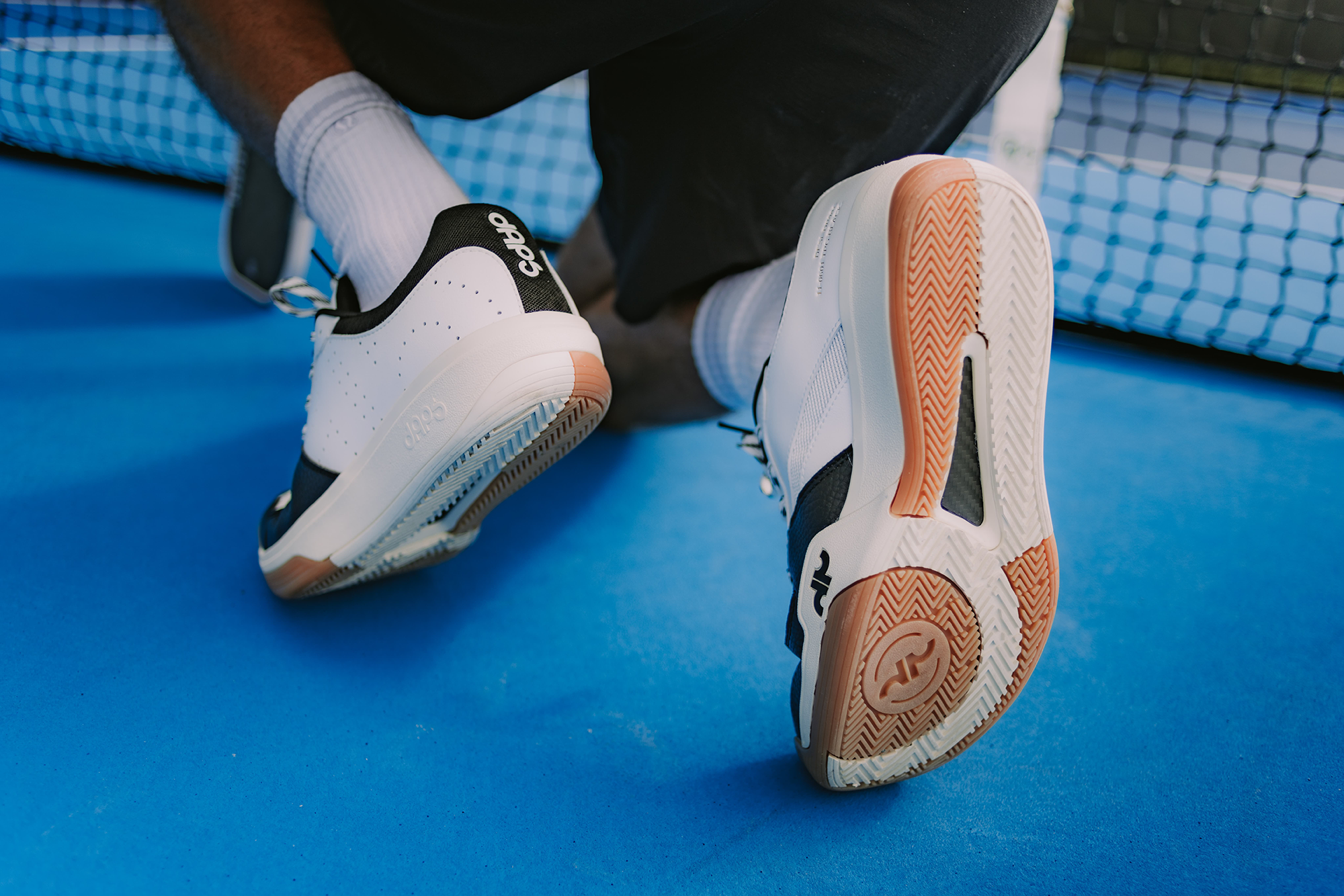
| DAPS DESI | Explosive change-of-direction & aggressive kitchen play | Indoor / Outdoor | High-rebound TPU platform | Court-optimized herringbone | Lateral containment + torsional rigidity | Accommodating performance last (room where needed without excess volume) | Demonstrated high push-off force and reduced stance time in change-of-direction testing |
| Budget Court Model | Entry-level recreational play | Outdoor | EVA | Durable rubber | Basic platform stability | Standard last | Moderate propulsion, softer under lateral load |
| Wide-Fit Court Model | Wide-foot comfort | Indoor | EVA | Gum rubber | Varies by build | True wide-last construction | Comfort-oriented, moderate energy return |
| Stability-Focused Model | Players needing added structure | Indoor | EVA + TPU blend | Herringbone | Cage + wide base platform | Structured fit | Balanced propulsion with additional containment |
| Cushioned Model | Impact-sensitive players | Indoor / Outdoor | Soft cushioning blend | Court tread | Heel-focused support | Roomy forefoot | Lower landing shock feel, slower rebound response |
All models evaluated against lateral stability, propulsion response, outsole friction, and short-court change-of-direction performance.
Why Pickleball Demands a Dedicated Court Shoe: The Injury Data
How Common Are Pickleball Foot and Ankle Injuries?
Pickleball injury rates have increased as participation has grown. A 2024 epidemiologic study of 198 pickleball-related foot and ankle injuries reported that 39.4% were Achilles tendon ruptures and injury incidence increased 6.5-fold between 2019 and 2023. Source: PMC (2024 foot and ankle injury study).
What Movements Cause the Most Pickleball Injuries?
Falls and awkward recoveries are common in recreational play. A 2024 study published in the International Journal of Sports Physical Therapy found nearly half of recreational players reported a fall, with many occurring during lunging and backward movements. Source: PMC (2024 falls and movement study).

Does Shoe Design Actually Reduce Injury Risk on Court?
Yes. Research in the British Journal of Sports Medicine found that adding a low-friction patch to the lateral sole of indoor court shoes reduced severe lateral ankle sprain incidence by 53% in a randomized trial of 510 athletes. The takeaway is simple: outsole friction is a performance variable, not just a style choice. Source: BJSM (lateral outsole friction trial).
The takeaway is not that pickleball is dangerous. It’s that footwear plays a measurable role in how the body absorbs and redirects force on a compact court.
The Performance Science Behind Court Shoe Construction
What Should a Pickleball Shoe Outsole Be Made Of?
- Indoor courts: non-marking gum rubber often provides strong grip, but it can wear faster outdoors.
- Outdoor courts: more durable rubber compounds last longer on abrasive surfaces like concrete.
- Tread: herringbone or modified herringbone patterns support multidirectional movement.
Important: Not all traction is “more is better.” Controlled lateral release can reduce severe sprains, as shown in the BJSM trial linked above.
TPU vs EVA Midsoles: Which Delivers Better Court Performance?
Energy return affects how responsive a shoe feels during quick bursts and repeated stops. A biomechanics study reported EVA midsole shoes had hysteresis around 31 to 32%, while TPU midsoles were around 21 to 22%, indicating higher energy return in TPU. Source: Frontiers (TPU vs EVA hysteresis).

Material testing summaries also note advanced TPU-based foams can achieve energy return comparable to PEBA foams used in many modern high-rebound shoes. Source: RunRepeat (energy return overview).
Heel-to-Toe Drop and Achilles Load in Pickleball
Pickleball involves repeated accelerations, decelerations, and lunges. Heel geometry and stability can influence Achilles loading patterns. Given the high share of Achilles injuries in pickleball reporting, this is a selection factor worth taking seriously. See the injury study: PMC foot and ankle injury study.
Lateral Stability Architecture: What to Look For
- Containment: lateral cage or structured sidewalls that prevent foot spillover during cuts
- Heel counter rigidity: helps keep the rearfoot stable on stops and pivots
- Torsional support: midfoot rigidity that reduces twisting on quick changes of direction
- Platform width: a stable base that resists tipping during lateral movement
Product integration spot: This is a clean place to link to DAPS and explain how its engineering aligns with these variables, using spec-first language.
Best Pickleball Shoes for Men
What Men’s Pickleball Players Should Prioritize in a Shoe
- Durable outsole edges (outdoor wear is real)
- Lateral containment that holds up under harder cuts
- A stable platform that does not collapse under load
- Fit that prevents sliding inside the shoe
Top Picks for Men: Evaluated by Court Performance Criteria
- DAPS DESI: built for short-court movement, stability, and responsiveness
- Stability-focused court shoe: good for players prioritizing containment
- Budget court option: acceptable for lighter play and slower footwork
Best Pickleball Shoes for Women
How Women’s Court Biomechanics Differ and Why Last Matters
- Heel fit matters for stability and blister prevention
- A stable platform matters for lateral movement confidence
- Containment helps prevent foot spillover on hard cuts
Top Picks for Women: Evaluated by Court Performance Criteria
- DAPS (women’s fit): purpose-built containment and court feel
- Lightweight court model: best for moderate play
- Supportive platform shoe: for players who want more structure
Best Pickleball Shoes for Wide Feet
Why Standard Court Shoes Fail Wide-Foot Players

- Toe box compression can lead to hot spots and blisters
- Cramped forefoot can destabilize lateral push-off
- Over-sizing for width can cause heel slip and loss of control
What to Look For in Wide-Fit Pickleball Footwear
- True 2E or 4E options (not just “roomy” marketing)
- Anatomical toe box geometry
- Stable platform that stays controlled even with extra width
Best Pickleball Shoes for Ankle Support

Does a High-Top Shoe Actually Prevent Ankle Sprains in Pickleball?
High collars can help with proprioception, but outsole friction engineering can play a bigger role in severe sprain reduction. The BJSM trial on lateral outsole friction reported a 53% reduction in severe lateral ankle sprains in indoor athletes. Source: BJSM (lateral outsole friction trial).
Best Pickleball Shoes for Players with Ankle Instability
- Wide stable base with outsole flare
- Lateral cage or structured containment
- Torsional midfoot support
- Collar shape that improves heel lock
Best Pickleball Shoes for Plantar Fasciitis
How Court Movement Can Aggravate Plantar Fasciitis
- Hard surfaces increase repetitive loading
- Lunges and stops stress the heel and arch
- Soft shoes that collapse can increase strain
Key Features for Plantar Fasciitis Relief in Court Shoes
- Deep heel cup for stability
- Arch support geometry that fits your foot
- Orthotic compatibility if needed
- Balanced cushioning that does not sacrifice control
Best Pickleball Shoes for Plantar Fasciitis: Evaluated
- Supportive court model with stable heel cup
- Cushioned-but-structured court shoe
- DAPS (if pairing with an insole system that fits your needs)
Indoor vs Outdoor Pickleball Shoes: What’s the Actual Difference?
Can You Use Outdoor Pickleball Shoes Indoors?
You can, but it is not ideal. Outdoor compounds may mark indoor floors, and some outdoor tread designs can reduce the “clean” grip indoor courts require. Indoor gum rubber can also wear quickly on outdoor concrete.

What Surface Are You Playing On Most? A Decision Framework
- Indoor hardwood or sport tile: non-marking gum rubber, court tread
- Outdoor concrete or asphalt: durable rubber, abrasion resistance
- Mixed play: a balanced outsole compound and tread that does not compromise stability
Pickleball Shoes vs Tennis Shoes: Why Tennis Shoes Fall Short
Are Tennis Shoes OK for Pickleball?
For casual play, tennis shoes can be “good enough.” For serious play and frequent sessions, they are often suboptimal because pickleball demands kitchen-line bursts and compact lateral cuts.

5 Structural Reasons Tennis Shoes Are Not Engineered for Pickleball
- Heel geometry often differs from what short-court split-steps require.
- Construction can be heavier than necessary for rapid direction changes.
- Outsole patterns are often tuned for full-court tennis movement, not kitchen-line footwork.
- Midsole tuning often targets baseline impacts more than multidirectional energy return.
- Toe protection placement is often optimized for tennis toe-drag, not pickleball lunge mechanics.
When a Tennis Shoe Might Be Acceptable and When It Won’t Be
- Acceptable: light recreational play, low intensity, limited lateral cutting
- Not ideal: competitive play, frequent sessions, aggressive lateral movement
How to Buy the Right Pickleball Shoe: Buyer’s Guide
What’s the Most Important Feature in a Pickleball Shoe?
Priority order: lateral stability, outsole friction geometry, midsole responsiveness, surface-appropriate outsole compound, and fit.
How Much Should You Spend on Pickleball Shoes?
- Entry: $90 to $125 (tradeoffs in durability and stability)
- Performance: $125 to $160 (better containment and outsole)
- Premium: $161 to $200+ (purpose-built materials and engineering)
How Long Do Pickleball Shoes Last?
- Outdoor concrete: often 3 to 6 months for regular players
- Indoor courts: often 6 to 12 months
Replace when the lateral outsole edge is worn down or the midsole loses rebound, not just when the upper looks beat up.
Should You Size Up in Pickleball Shoes?
- Leave about a thumb’s width of space in the toe box.
- If you need room, choose a true wide option before sizing longer.
Best Pickleball Shoes Under $100
- Budget court model for light play
- Entry-level indoor court shoe (non-marking outsole)
- Value outdoor option with durable rubber
Product integration spot: Position DAPS as the premium-tier benchmark with spec-based rationale tied to stability, outsole friction, and energy return.
Frequently Asked Questions: Pickleball Shoes
What’s the difference between pickleball shoes and tennis shoes?
Pickleball shoes are engineered for kitchen-line bursts, compact lateral cuts, and short-court stability. Tennis shoes are tuned for longer movement distances and baseline-dominant patterns.
Can I wear running shoes for pickleball?
No. Running shoes are designed for forward-linear motion and typically lack the lateral containment and stable platform needed for court sports. For frequent players, they can increase risk during lateral cuts and lunges.
Are pickleball shoes necessary or just marketing?
The distinction is legitimate. Court shoe design can measurably influence injury risk, including outsole friction variables linked to reduced severe ankle sprains. Source: BJSM trial.
What pickleball shoes are best for wide feet?
Look for true 2E or 4E options built on a wide last, plus a stable platform that does not collapse under lateral load.
Are high-top pickleball shoes better for ankle support?
High collars may provide proprioceptive feedback, but outsole friction engineering and platform stability are often more important for severe sprain risk reduction. Source: BJSM trial.
What’s the best pickleball shoe for plantar fasciitis?
Choose a stable court shoe with a deep heel cup, supportive arch geometry, and orthotic compatibility if needed. Avoid overly soft shoes that collapse during lateral movement.
How often should I replace my pickleball shoes?
Outdoor concrete can wear shoes faster than indoor surfaces. Replace when lateral outsole edges are worn or midsole rebound is gone, even if the upper still looks fine.
What’s the best pickleball shoe for men over 50?
Prioritize stability, controlled traction, and Achilles load management. Achilles ruptures represent a large share of reported pickleball foot and ankle injuries. Source: PMC injury study.
Do pickleball shoes work on both indoor and outdoor courts?
Some do, but there are tradeoffs. Indoor gum rubber wears quickly outdoors, and outdoor compounds can mark indoor floors. Surface-specific shoes perform best when your primary surface is consistent.
Is TPU or EVA better in pickleball shoe midsoles?
For many players, TPU offers better energy return and durability under multidirectional load than EVA. Source: Frontiers study.
What makes DAPS different from other pickleball shoes?
DAPS is built around short-court biomechanics from the outsole up. Rather than adapting a tennis or cross-training last, it was engineered for lateral acceleration, controlled friction, and propulsion efficiency specific to pickleball movement patterns.
Final Takeaway
Pickleball is a short-court sport with real injury risk and real performance demands. The best pickleball shoes in 2026 prioritize lateral stability, controlled traction, and responsive midsoles that hold up under cuts, lunges, and repeated stops. Build your footwear choice around court movement, not trend.

Leave a comment
This site is protected by hCaptcha and the hCaptcha Privacy Policy and Terms of Service apply.