


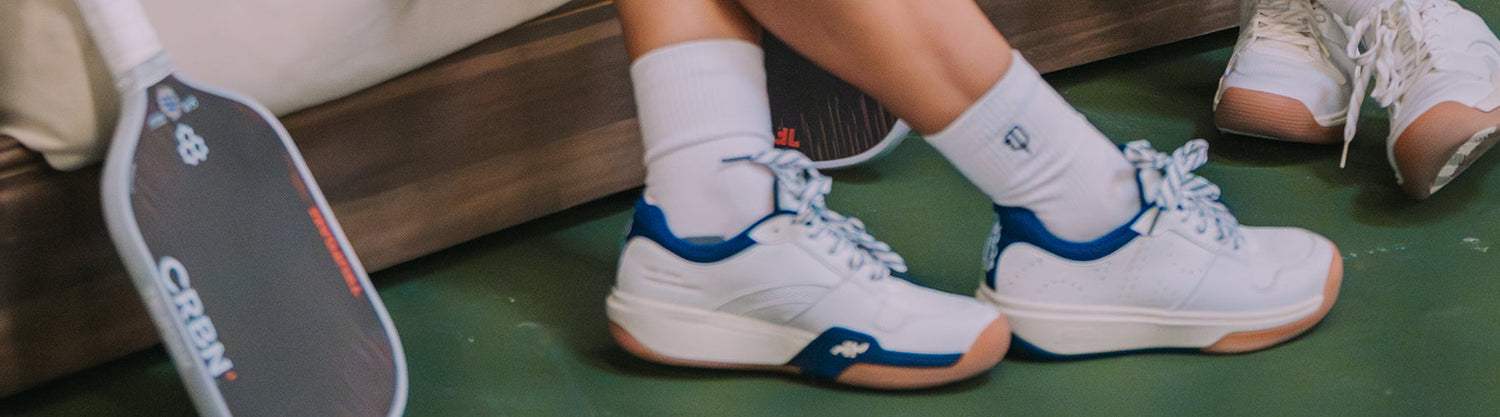
Key Takeaways
- A shoe's "lightweight" label on the box doesn't always match how it feels on court; the real difference comes down to foam density, upper material, and shank weight.
- Lighter shoes can help you get to the ball faster, but only if the midsole still cushions your landings properly.
- A genuinely lightweight pickleball shoe balances speed with stability.
- DAPS Desi Low and Desi Mid use ETPU cushioning and a full carbon fiber shank to give players a lighter, more responsive feel without giving up on-court control.
Pickleball rewards quick feet. You're constantly starting, stopping, and shuffling sideways to cover the kitchen line, and the shoes on your feet play a bigger role in that than most players realize. That's why "lightweight pickleball shoes" has become such a common search; players want speed, but they don't want to trade away support to get it.
The problem is that "lightweight" gets printed on a lot of shoeboxes that don't actually deliver a lighter feel once you're moving. Some shoes are light because the brand thinned out the cushioning. Others are light because they used a cheaper, less supportive shank. Neither trade-off helps you play better; it just moves the problem somewhere else on your foot.
This guide breaks down what actually makes a pickleball shoe lightweight (not just labeled that way) and how that weight shows up in your speed, your stops, and how fresh your legs feel late in a match. Along the way, we'll look at how DAPS built the Desi Low and Desi Mid around that exact idea, using ETPU foam and a carbon fiber shank instead of chasing a low number on a spec sheet.
What Does "Lightweight" Actually Mean in a Pickleball Shoe?
When players search for a lightweight pickleball shoe, most are really asking for three things at once: a shoe that feels fast, doesn't wear them out, and still holds up when they plant hard to change direction. Whether a shoe delivers on that comes down to three components working together.
- Foam density: Lighter foam isn't automatically better. Foam that's too soft or too airy compresses fast and stops giving energy back, which makes your legs work harder by the second set.
- Upper material: Mesh and knit uppers weigh less than leather or heavy synthetic overlays, and they also breathe better through a long session.
- Shank weight: The shank is the stiff piece embedded in the midsole that keeps the shoe from twisting when you plant and cut. Older materials like nylon or steel add noticeable weight; carbon fiber does the same job for less mass.
A shoe can look light on paper and still feel sluggish if these three parts aren't engineered together.
How Does Shoe Weight Actually Affect Your Speed and Stamina?
The physics here is straightforward: your leg muscles have to accelerate and decelerate whatever mass is strapped to your foot, step after step. Research on running shoes has found that adding just 100 grams of mass per shoe raises the energy cost of movement by roughly 1 percent. That study was done on runners, but the same underlying principle applies to the short, explosive bursts of pickleball. Every split step, lunge, and recovery step asks your legs to move that extra shoe weight too.
Over a single point, that difference is barely noticeable. Over a full match, or a full afternoon of open play, it adds up into legs that feel heavier and reaction times that slow down.
The right combination of weight, cushioning, and stability can help your footwork feel more controlled, so you're moving on your terms instead of fighting your shoes.
Marketed "Lightweight" vs Actually Lightweight: How to Tell the Difference
Here's a practical test: pick the shoe up and flex the sole. If the midsole feels stiff and the shank feels like a rigid slab, that weight has to be coming from somewhere, usually a denser foam or a heavier stabilizing plate.
A few things worth checking before you buy:
- Look at what the midsole foam is actually called (EVA, ETPU, PU) rather than trusting marketing copy alone.
- Check whether the shank material is named. "Supportive shank" without a material listed is often just a plastic or nylon piece.
- Compare the upper. A knit or engineered mesh will almost always run lighter than a synthetic leather overlay, even at the same size.
- Don't assume low-top automatically means lightweight. Some low-tops use heavier midsole compounds to make up for less ankle structure.
How DAPS Desi Low and Desi Mid Are Built Around This
This is the exact gap DAPS designed the Desi line to close. Instead of shaving weight from one part of the shoe and calling it lightweight, the Desi Low and Desi Mid combine three specific materials chosen for their weight-to-performance ratio.
ETPU Midsole Foam
The Desi's midsole is built from ETPU, an eco-friendly, non-toxic foam designed to return energy on each step rather than just absorb it. That means the cushioning doesn't have to be overbuilt (and heavy) to feel supportive.
A Full Carbon Fiber Shank
Instead of the plastic or nylon shanks common in shoes retooled from tennis, DAPS uses a full carbon fiber shank. Carbon fiber gives the shoe torsional stability for sharp cuts while cutting weight compared to older shank materials, so you get control without a stiff, heavy underfoot feel.
A Breathable CoolKnit Mesh Upper
The upper is built from a lightweight, breathable knit rather than heavier synthetic overlays, which keeps the shoe's overall structure from adding weight it doesn't need.
Beyond the materials, both models add a CNC-cut, non-marking rubber outsole for traction and a Blumaka NonSlip insole for underfoot grip. Independent testing at Heeluxe measured faster starts, quicker stops, and better energy return in the Desi line, which lines up with what these materials are designed to do.
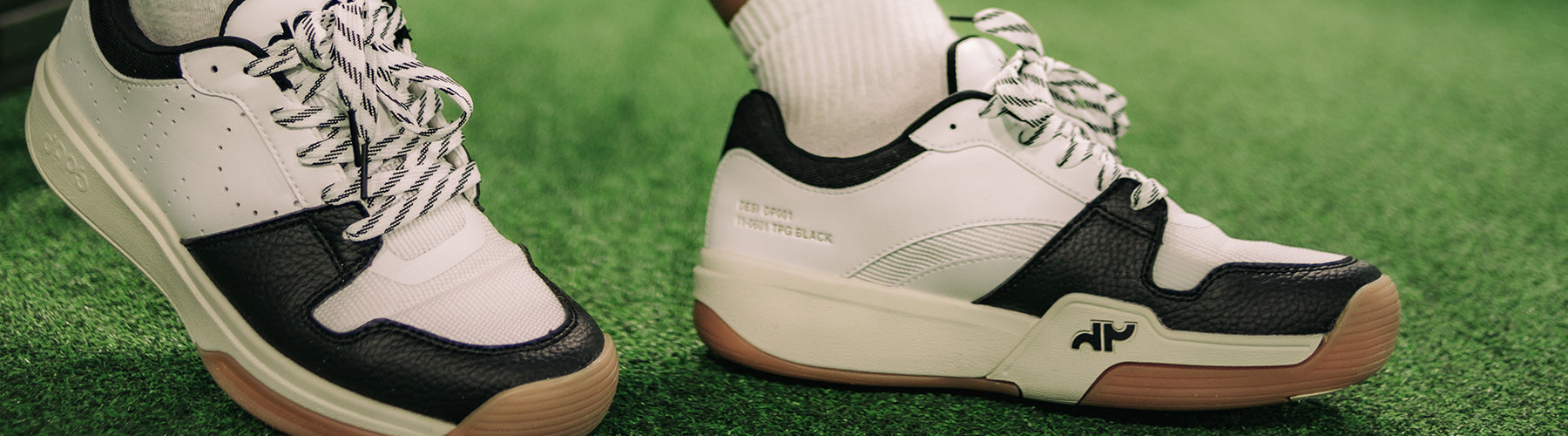
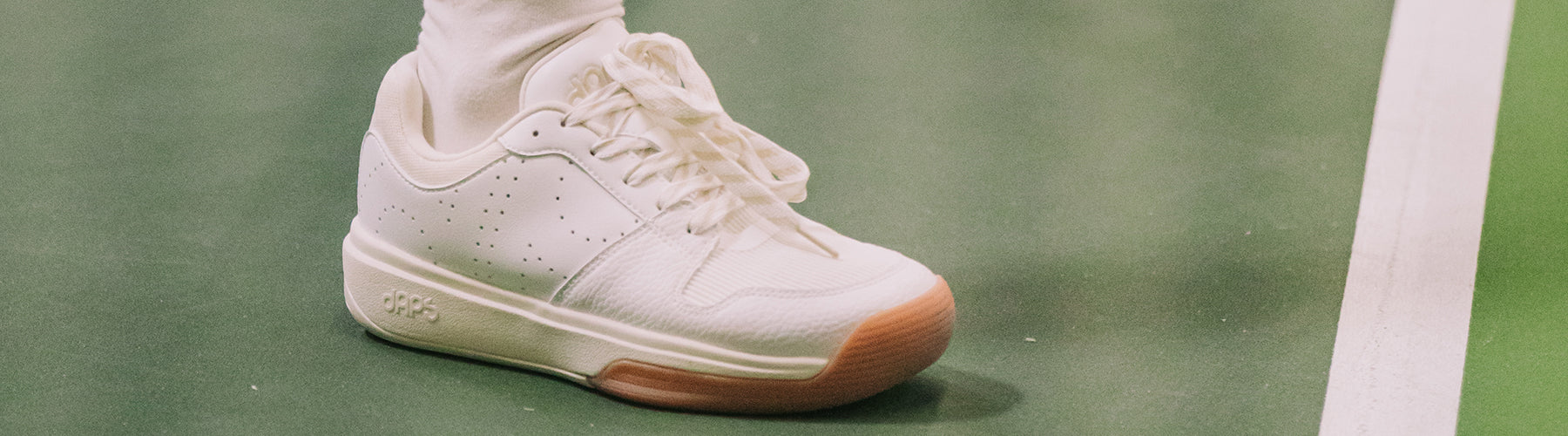
The difference between the Low and the Mid comes down to how much ankle coverage you want. The Desi Low keeps a low-profile, minimal cut for players who want the least amount of shoe between their foot and the court. The Desi Mid moves to a mid-cut design that adds reinforced coverage above the ankle, for players who pivot hard and want a bit more structure, while still building on the same ETPU cushioning and carbon fiber shank underneath.
Final Takeaway
"Lightweight" only means something when it's backed by materials working together: foam that returns energy instead of just going soft, an upper that doesn't add bulk, and a shank that stabilizes without adding heft. Skip any one of those, and a "lightweight" shoe can still leave your legs dragging by the third game.
DAPS built the Desi Low and Desi Mid around that exact standard, using ETPU midsole foam and a full carbon fiber shank to give players a genuinely lighter, more responsive feel without cutting the stability your feet need on a pickleball court. If you've been chasing speed without wanting to give up support, that combination is worth trying on for yourself.
Explore the Men's Desi Low and Mid or the Women's Desi Low and Mid to feel the difference firsthand.
Frequently Asked Questions
Are lightweight pickleball shoes actually better, or is it just marketing?
It depends on how the shoe achieves its low weight. If a brand cut cushioning or support to hit a lighter number, that's a marketing win, not a performance one. If the weight comes from better materials, like ETPU foam or a carbon fiber shank instead of a heavier plastic one, the lighter weight is a real, functional advantage.
How much should a pickleball shoe weigh?
There's no single "correct" weight, since it depends on your size and the shoe's build. What matters more than a number on a spec sheet is how the shoe feels once you're moving: does it let you get in and out of your stance quickly without feeling flimsy underfoot.
Do lightweight pickleball shoes sacrifice ankle support?
Not necessarily. Ankle support mostly comes from the shoe's collar height and how it's shaped around your heel and ankle, not from how much the shoe weighs. That's part of why mid-top options exist, for players who want more coverage without switching to a heavier shoe entirely.
What's the difference between a low-top and mid-top lightweight pickleball shoe?
A low-top sits below the ankle bone and generally feels the most unrestricted for lateral movement. A mid-top adds coverage above the ankle for players who want more structure there, while still keeping the same lightweight foam and shank underneath.
Can I just wear lightweight running shoes for pickleball instead?
Running shoes are built for forward motion, not the constant side-to-side cutting pickleball demands. Their outsoles and midsoles usually aren't tuned for lateral stability, and some running shoe outsoles can mark up indoor courts. A shoe built specifically for court sports will generally hold up better to that kind of movement.

Leave a comment
This site is protected by hCaptcha and the hCaptcha Privacy Policy and Terms of Service apply.